


UK Trial Will Pay Homes to Use Surplus Wind Power - How Demand Turn-Up Works
Published: 2026-11-24 13:58:38
Updated: 2026-11-24 05:59:38
See how the UK demand turn-up trial will test electricity discounts when wind power is surplus, and when shifting EV charging could cut your bill.
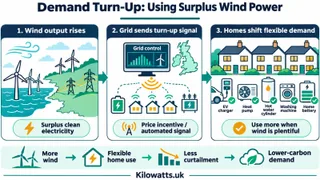
How the UK demand turn-up trial will use surplus wind power
The UK demand turn-up trial will test whether electricity discounts encourage households and businesses in Great Britain to use more power when renewable generation would otherwise be cut back. An eligible household could bring forward an electric vehicle charge to a discounted window. Any saving depends on the provider’s terms, where the household is on the network and how much charging it can move from a more expensive time. Carbon Trust trial announcement
UK Research and Innovation and the Department for Energy Security and Net Zero are behind the trial. Arup leads delivery with the Carbon Trust, Ipsos and Technopolis. Innovate UK lists 1 December 2026 as the planned Phase 1 start for provider projects and 31 March 2028 as the expected end of live delivery. Participating providers will set their own recruitment and event dates. Arup delivery announcement · Innovate UK trial timetable
Why using more electricity can help the grid
Demand turn-up means increasing electricity use during a set period. When wind farms could produce more power than the network can carry to where it is needed, the system operator may ask generators to reduce output. This is called curtailment. Bringing electricity use forward on the same side of the network constraint as the wind farms can help use some of that power locally. Innovate UK trial scope
A windy afternoon may create the conditions for an event. To take part, customers need an offer that covers their area and confirms when the event runs. Innovate UK expects the greatest initial benefits in Scotland and the East of England. Providers can also propose activity elsewhere in Great Britain where it meets a network need. Innovate UK geographical scope
How discounts will work and who can take part
In Phase 1, participating electricity suppliers and other flexibility providers will make offers through eligible National Energy System Operator (NESO) markets. The trial uses rebates on eligible Final Consumption Levies, which are policy charges paid through electricity bills. Providers will pass the financial benefit on to customers whose qualifying activity they can measure and verify. Innovate UK provider guidance
The September 2026 deadline was for providers applying to join the trial. As of 24 November 2026, the published trial material gives no common household sign-up date, confirmed consumer discount rate or typical event duration. If you receive an offer, check whether your postcode and meter qualify, what data you need to share, how much notice you’ll get and how the benefit will appear on your bill. If payment depends on using more electricity than usual, ask how the provider estimates your normal use for that period. Innovate UK expression of interest and measurement requirements
Which electricity use can you move into an event?
Start with a task you already need to run and work back from when it has to finish. A car parked for several hours may offer more flexibility than a van due out on its next route. Kilowatt-hours (kWh) measure how much electricity you can shift. The equipment’s charging or running rate, measured in kilowatts (kW), helps determine how much of that energy will fit into the event window.
Overview
If you have rooftop or balcony solar, check how much electricity you import during the event. Solar can cover some of the extra demand, so your EV or battery app may show more energy going into the battery than your meter records coming from the grid. If the offer measures grid imports, check the provider’s terms before counting that charging towards a reward.
Will demand turn-up cut your electricity bill?
You’re most likely to save if the discounted event replaces electricity you would have bought at a higher rate. For an EV, compare the event rate with what you usually pay to charge, including any cheap overnight period. For a battery, compare the cost of charging during the event with the value of the usable electricity it delivers later, after losses. Even at a discount, running equipment you would otherwise leave off can increase your bill.
There is no published figure for typical household savings. Check your meter data or charging history to see what you could move, then estimate the saving using the provider’s terms. If you’re already comparing solar, batteries or EV charging, use the Kilowatts UK comparison tools and installer directory to assess equipment against your everyday usage and tariff.
Could demand turn-up become a regular feature?
The trial will test whether enough households and businesses can reliably shift demand to where and when it reduces curtailment. It will measure how much electricity use moves from another time and how much is additional. It will also assess whether the benefits justify longer-term changes to how the levies are applied. The results will inform future policy. For now, judge any offer by whether it fits electricity use you can move and lowers what you pay for it. Carbon Trust evaluation plans
Solar comparison
Compare solar for your property
Enter your postcode to assess your roof, compare solar options and get quotes from UK installers.
- Free postcode start
- Home, business and industrial
- RoboMo™ maps your roof
See which panels fit your roof
Choose home, business or industrial, then enter your postcode. RoboMo maps the roof and ranks panel brands by fit.
1. Postcode Start the assessment for your property.
2. Pin the roof Mark the array on the map.
3. Compare RoboMo™ builds your options.

Battery ROI tool
See what a battery saves on your bill
Enter the day rate, off-peak rate and export rate. The calculator ranks batteries in the Kilowatts shop over 10 years. Home batteries also suit offices and small commercial sites.
Reading
Sources and further reading
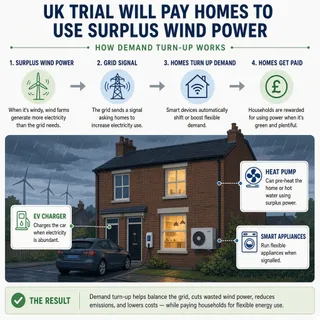
The UK Demand Turn-Up trial will not pay every home to use surplus wind power, and it is not free electricity.
Read article
A home battery stores daytime solar and releases it in the evening. Here's how time-shifting works, what happens when it empties, and how to size one properly.
Read article
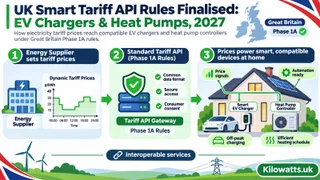
See how Great Britain’s smart tariff API can help EV chargers and heat pumps run in cheaper hours, and what to check before buying kit or switching tariff.
Read article
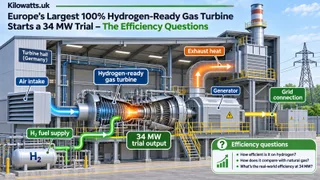
See what Lingen’s 34 MW hydrogen gas turbine trial could reveal about net grid export, round-trip efficiency and backup power for the UK grid.
Read article


Mo's Solar Mission
Mo's Mission Nominations
Garlinge Primary School and Nursery
Garlinge Primary School and Nursery is a foundation primary school on Westfield Road in Margate, Kent, for children aged 3 to 11. It is m...
St Luke's Church of England Primary SchoolSt Luke's Church of England Primary School is a voluntary controlled Church of England primary school on Jubilee Road in Formby, Merseysi...
Comberbach Nursery and Primary SchoolComberbach Nursery and Primary School is a primary academy on Mather Drive in the village of Comberbach, near Northwich in Cheshire, for...
Locations
Solar installation near you
Write for Kilowatts.uk
Got a trade and something worth saying?
Write it here under your own name. Sign in, put a profile up, and start a guide. Pay only if you want more links from your articles out to your own site.
Register
Create a Kilowatts.uk account, or sign in if you already have one.
Author profile
Put your name, photo and experience on a public author page.
Start creating
Write a guide or a blog. Free authors can put one followed link to their own site in articles each month.
FAQ
Need Help? RoboMo's Got Answers
What is demand turn-up and how can it help use surplus wind power?
Demand turn-up means using more electricity during a specific period, for example by charging your electric car earlier than planned. When a network bottleneck would otherwise force wind farms to cut output, extra demand on the same side of the bottleneck can help use more of that power.
When can households sign up for the demand turn-up trial?
The planned start for Phase 1 provider projects is 1 December 2026. The trial has no single household sign-up date. Participating suppliers and other flexibility providers will set their own recruitment and event dates.
How do I know if my home is eligible?
The trial expects the greatest initial benefits in Scotland and the East of England, with possible activity elsewhere in Great Britain where it meets a network need. Check whether a participating provider covers your postcode, accepts your meter and can use the data it needs to verify your electricity use.
How will I get the discount, and how much could I save?
Check the provider’s offer for the discount or payment amount, how you earn it and how it will be applied. There is no confirmed trial-wide household discount rate or published figure for typical savings. Compare the cost of using electricity during the event with what you would normally pay, including any cheaper overnight EV rate. Extra use you would otherwise avoid can still increase your bill.
What household electricity use could I move into an event?
Home EV charging, grid charging of a home battery and reheating a hot-water cylinder are examples of uses you may be able to reschedule. Check which activities the provider covers and how much notice you will get. For an EV, make sure the car and charge point timers allow charging during the event and that the car will have enough charge by departure.
How will the provider know whether I used extra electricity?
Providers must be able to measure and verify qualifying use. If your reward depends on using more electricity than usual, ask how the provider estimates what you would normally use during that period. Check what meter data you need to share.
Can I take part if I have solar panels?
Check the provider’s eligibility and measurement rules. If the offer counts electricity imported from the grid, power supplied by your solar panels will not count towards that import. Your EV or battery app may therefore show more electricity used for charging than your meter records as imported.
Live help
Need help right now?
Talk to RoboMo™ and get instant answers.