


Is battery storage worthwhile in Stanford in the Vale?
Published: 2026-10-07 01:57:28
Updated: 2026-10-06 18:58:17
Battery storage in Stanford in the Vale is worth it only if load, tariff and the SSEN connection let you move surplus or cheaper power to a later hour.

Battery storage stanford in the vale?
Understand battery storage stanford in the vale in the UK, with clear explanations, examples, and practical next steps.
Is battery storage worthwhile in Stanford in the Vale?
Battery storage in Stanford in the Vale is worthwhile only when that property’s load, tariff, and network connection support moving electricity from a surplus, or from a genuinely cheaper rate, into a later hour that would otherwise be imported at a higher price. The village name, and the SN7 postcode area it sits in, does not change solar irradiance, create a local grant, or set installer prices. England has no general grant for a home battery. A weak bill, an export rate close to the import you avoid, or nowhere safe to put the cabinet are all reasons to stop.
Stanford in the Vale is in the Vale of White Horse, Oxfordshire. Yield here sits in the same broad band as much of southern England. Roof orientation, shading, and usable roof or ground area matter more than the place name. Distribution for this part of Oxfordshire is normally Scottish and Southern Electricity Networks (SSEN), but the supply at the meter point should still be confirmed before anyone promises an export limit or a charge rate.
Storage helps when daytime generation regularly exceeds use, or when a cheap charge window you can actually get lines up with a later peak. It helps less when use is already very low. Farms, workshops, and small businesses around the village need a different brief from a house, because three-phase supplies, half-hourly metering, and process loads change both the hardware and the connection.
What a stationary battery does, and what it does not
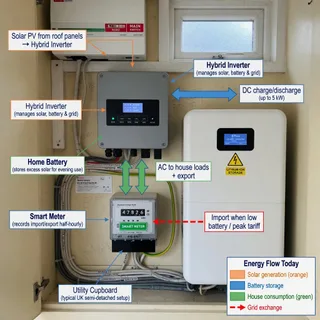
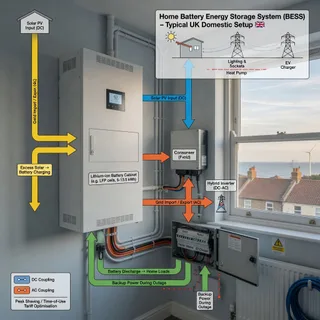
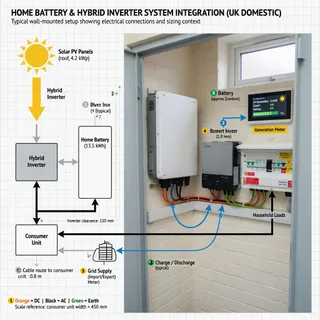
Here, battery storage means a fixed system for a home, farm, or business. It is not a portable power bank, and it is not the battery inside an electric vehicle. An EV can sit alongside a site battery, but it does not supply the building unless it is specifically set up to do so, which many cars are not. Most new systems use lithium-ion cells, often lithium iron phosphate. They may be DC-coupled on the solar side of the inverter, or AC-coupled on the property's AC supply so they can be added to an existing array or, in some cases, used without solar.
Two ratings are easy to mix up, and mixing them up produces the wrong quote. Usable capacity, in kilowatt-hours, is how much energy you can actually draw. Power, in kilowatts, is how fast the battery can charge or discharge. A large energy figure with a small power rating will not cover a sharp evening peak, a heat-pump start, or a workshop load that comes on all at once. Compare usable kilowatt-hours, not a nominal nameplate that includes energy the system will not let you use.
A battery does not take a property off the grid unless it is designed as backup, with enough energy, a suitable inverter, and a safe way to disconnect from the network. Many home batteries only run while the grid is present, or they back up a few selected circuits for a limited time. Assuming every quote includes blackout cover is a common and expensive mistake. Charging from the grid at a peak rate and discharging later can also increase the bill. Storage is a timing tool, not an automatic discount.
Homes, farms, and businesses need different briefs
A house in the village is often on a single-phase supply, with a consumer unit that may already be tight for space, especially in an older cottage. A sensible domestic brief is built from a year of bills or smart-meter data, the solar array you have or plan, and the tariff you can actually get on that meter. Adding a heat pump or an EV can strengthen the case, but only if the battery is sized to that new load rather than to a generic household figure. Occupancy matters. A home empty all day with a decent south-facing array is a different job from a home that already uses most of its solar as it is generated. Farms, workshops, and small commercial sites in and around Stanford in the Vale are more likely to be three-phase. That changes the maximum charge and discharge rate and the way the network operator treats the connection. Cold stores, pumps, grain handling, and workshop machinery create repeated peaks that a domestic rule of thumb will miss. Half-hourly meter data, not a family-of-four calculator, should drive the size. Backup of critical loads can be worth modelling where a power cut has a real cost, but that is a specified circuit list and a runtime, not a brochure claim of whole-site cover. Larger industrial battery energy storage is a different project again. It brings a dedicated connection, a safety case, insurer conditions, and a commercial contract. It is not a home battery scaled up. If the site is a factory or a large agricultural operation with its own half-hourly charges, treat it as a load-management design and keep the village house guide separate from that specification.
A labelled day sketch, not a savings quote
The table below is an illustration of shape, not a design for any address in SN7 and not a quote. It does not state kilowatt-hours, kilowatts, cycle counts, or bill savings, because those only exist once someone has read the meter and the tariff. Use it to see whether your own day even has a surplus, a later expensive hour, and a reason to cycle the battery more than once. A single-phase cottage often has one obvious solar cycle on a bright day: charge while the roof exceeds the house, then discharge into the evening if usable energy remains. A second, overnight cycle only exists if that meter has a cheaper rate and the battery has room. Charging in the peak and discharging later is not that pattern, and it can raise the bill. Winter days may barely cycle on solar alone. A three-phase farm or workshop rarely follows a household evening. Pumps, a cold store, or machinery can swallow daytime solar, so surplus is patchy. A short process peak can exceed the battery’s power rating even when energy is still in the pack. Any cheap window is the one in the business contract, not a domestic overnight headline. If there is no repeated peak, no constrained export, and no priced cost of a power cut, the sketch will not invent a case for a large system.
Connection, planning, and where the cabinet can sit
Export and generation, including storage that can export, are handled under the Energy Networks Association’s Engineering Recommendations, commonly EREC G98 and EREC G99. This article does not state a kilowatt cut-off, because forms, fees, and how a product is classed change, and a fixed village limit would be invented. Take the current route from the ENA text in force and from SSEN’s guidance for the actual meter point. In a rural area the local network may already host solar and other generation, so an application can be accepted, limited, or delayed. That is a site outcome, not a rule for Stanford in the Vale.
Where the network will not accept the full potential export, the design may rely on an export limitation scheme under EREC G100. A G100-type arrangement is a designed cap on what leaves the site, with equipment and settings that have to match the connection offer. It is not a way for the battery to ignore the agreement, and it is not the same decision as choosing G98 notification or a G99 application. If the inverter, the coupling method, or the export cap changes after the application, SSEN may treat it as a different proposal.
Many properties here are ordinary houses. Some are older, listed, or in a setting where external changes are more sensitive. A battery indoors often raises fewer planning questions than an external cabinet, a larger commercial enclosure, or work on a listed building. That is not a planning determination. If the cabinet, cable route, or structure is visible or attached to a protected building, ask Vale of White Horse District Council before treating consent as unnecessary. For a dwelling, location is also a fire-safety design question. PAS 63100 is the British Standard specification for protection against fire of battery energy storage systems for use in dwellings. It covers how and where a domestic battery is arranged, including separation and access considerations, and it sits alongside the manufacturer’s clearances and the electrician’s design. It is not a planning policy for the village, and it does not replace a check for flood, heat, or maintenance access. An installer should be able to say how the proposed cupboard, garage, or external cabinet sits against that specification. Flooding is a practical constraint in parts of the Vale, not a label for every address. Do not site a battery in a space that floods, including a low outbuilding or a cupboard below a known water line. Check the Environment Agency flood map for the specific address, then look at the actual floor level and drainage on site. An external cabinet needs a suitable base, a weather rating that matches the exposure, and the clearances the manufacturer and the electrician will both insist on. In long rural layouts, the cable route from solar, consumer unit, and meter can dominate the job more than the battery modules themselves.
VAT, grants, and export payments
There is no England-wide grant that pays for a domestic battery in general. A scheme aimed at heat pumps, insulation, or a business energy project is a different product, with its own rules, and should not be assumed to cover storage in an SN7 house. Scottish or Welsh support, where it exists, does not become an Oxfordshire entitlement. Any claim that a grant is available should be checked against the scheme rules on the date you apply, not against a village rumour or an old article.
VAT is separate from grants, and this is not a tax ruling. The rate on a battery installed with solar, and the rate on a battery installed without solar, have not always been the same. In February 2024 HMRC widened the energy-saving materials treatment of electrical battery storage in residential accommodation, which is why a quote should state the VAT treatment for that job rather than copy a figure from an older guide. Confirm the rate for your installation date, whether the property is a dwelling, and whether solar is part of the same supply. Farm and commercial supplies should not be priced on a domestic assumption.
Smart Export Guarantee payments are set by the supplier you contract with. They are not a national fixed price, they are not set by SSEN, and they can change after you sign. If the export rate is close to the import price you avoid, shifting solar into the battery can produce a modest bill change even when the hardware works. Payback depends on the site, the tariff, and how fully the battery cycles. None of that should be taken from a national average.
When storage is a weak fit
Storage is a weak fit for very low electricity users, and for properties with no solar and no cheap rate they can actually switch to. A battery that is far too small misses the peak. One that is far too large spends money on kilowatt-hours you never cycle. Neither problem is fixed by a better-known brand, and neither is fixed by the fact that the postcode is SN7.
It is also a poor fit where the only acceptable location is flood-prone, too hot, unventilated, or inaccessible for maintenance and fire-service access. PAS 63100 and the manufacturer’s instructions will often rule out the single small cupboard that an older cottage has left, even when the roof is ideal for solar. Renters, and anyone who cannot get the freeholder’s agreement, are usually unsuitable. Expectations of zero bills, whole-home backup as standard, or a short payback without a load and tariff calculation are reasons to pause, not a sales target.
Commercial and industrial buyers should be equally blunt. If there is no repeated peak, no constrained export, and no priced cost of a power cut, a large system is hard to justify from a domestic story about using your own energy. Business battery storage earns its place from meter data and the contract you are on, including any half-hourly charges. Those contracts are not the same as a household time-of-use headline.
A brand-neutral quote checklist, including Hive searches
People sometimes arrive at a local question and then ask how a Hive home battery compares on price and value with similar products. This article does not hold a current Hive datasheet, a dated installed price, or confirmation that any branded unit is offered for new installs in Stanford in the Vale. Those facts should come from the manufacturer and from a written quote, not from a place-name article. Brand is not a proxy for better value. Value is usable kilowatt-hours, usable power, coupling method, round-trip losses on that datasheet, warranty split, install scope, backup behaviour, and the network assumption.
Round-trip efficiency for lithium systems is often discussed in a high band, but the figure that matters is the one on the datasheet for the product being quoted, measured in a way you can compare. Cycle life and calendar warranties differ by chemistry, depth of discharge, and temperature. A Stanford in the Vale address does not confer a standard installed price or a waiver of G98, G99, or G100. If a comparison has no dated price, no usable capacity, and no statement of what the install includes, it cannot tell you which option is better value.
Put two or three complete quotes side by side only after each one answers the same brief. Then test them against your own half-hourly or daily profile, not against a national typical home. If nobody can show how the battery charges and discharges on your tariff, the value claim is incomplete.
What to measure before you ask for quotes
Start with twelve months of electricity use if you have it, and note whether you are home in the day. If you already have solar, ask the inverter portal for generation and export, not just a headline annual yield. If you are planning solar and storage together, design the array and the battery as one system. A battery cannot store energy the roof never produces, and a large array with a tiny battery still exports most of its surplus.
Photograph the consumer unit, the meter, the proposed battery location, and the cable route, including any long run to an outbuilding. Note whether the supply is single-phase or three-phase. Check the flood map for the address, and walk the site after heavy rain if the land is low. For a dwelling, ask how the location sits against PAS 63100 and the manufacturer’s temperature range. For a farm or business, export a half-hourly file before anyone sizes the system. Give every installer the same brief so the quotes can be compared. You can also book a free survey before those quotes go out.
Then ask SSEN, or have the installer ask, what the current connection route is for that meter point, and whether local generation already constrains export. Do not assume a village-wide answer, and do not treat this article as the ENA or SSEN document. Prices, VAT, payback, and eligibility for any support depend on the site, the tariff, and the rules in force when you apply. Scheme membership such as MCS can matter for some tariffs and for quality assurance, but eligibility changes and should be checked against the current scheme rather than an older page.
Plan, Compare & Buy Renewable Energy Solutions
AI does the thinking.
You get the perfect solar match.
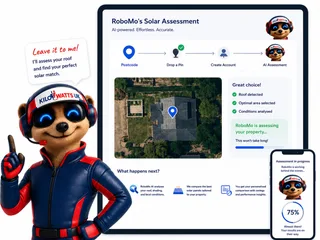
Use RoboMo™ to assess your property, compare available technologies and connect with trusted UK installers, suppliers and manufacturers.
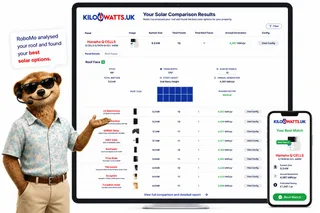
Simply enter your postcode, drop a pin on your roof, create your free account and let RoboMo™ analyse your property to find the best solar panels for your home.

You don't have to think
RoboMo™'s AI analyses your roof and does all the hard work.

Accurate & tailored
AI-powered assessment based on your roof, location, and conditions.

Best options, maximum savings
Compare top solar panels for the best performance and value.

Simple, fast & effortless
Provide a few details, sit back and watch your results unfold.
STEP 1
Choose Home, Business or Industrial
Enter your postcode to start your assessment.
STEP 2

Drop a pin on your roof
STEP 3

Create your free account
STEP 4

Sit back and watch RoboMo™ work
RoboMo™ analyses your roof and builds your personalised solar comparison.

Step 1
Enter your postcode
Start designing your wind energy system in seconds.
Are you an installer, distributor or renewable energy business?
Kilowatts UK is expanding the Flower Turbines partner network across the UK.
Become A Flower Turbines PartnerKilowatts UK is an authorised representative
Flower Turbines
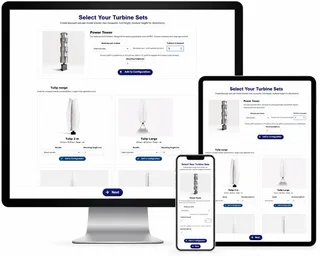
Compact vertical-axis turbines built for real UK sites, not just open farmland.
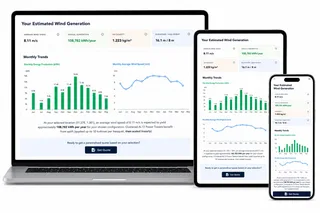
They start in light wind, sit in a small footprint, and are bird-safe by design. Cluster them as a bouquet and the group performs better together than the same turbines standing alone. Enter your postcode for a location-based generation estimate. Figures use area weather data and will differ if buildings, trees or hills sit in the way.
Starts in light UK wind
Built to generate in typical UK wind, not only open farmland.
Small rooftop or ground footprint
Compact towers for roofs, yards and tight sites.
Bird-safe slow rotation
Slow vertical-axis spin, bird-safe by design.
Bouquet clusters raise output
Grouped turbines outperform the same units standing alone.
STEP 2

Choose a location
STEP 3

Place your cluster
Tap the map where you want the turbine cluster to go.
STEP 4

Instant generation forecasts
Compare different turbine layouts and see annual generation forecasts instantly.
STEP 5

No commitment required
Explore different configurations before deciding whether to request a quotation.
Related articles

FAQ
Need Help? RoboMo's Got Answers
Is battery storage worthwhile in Stanford in the Vale?
It can be, but only when that property’s load, tariff and network connection support moving electricity from a surplus, or from a genuinely cheaper rate, into a later hour that would otherwise cost more. The village name and the SN7 postcode do not change solar irradiance, create a local grant or set installer prices. A weak bill, an export rate close to the import you avoid, or nowhere safe to put the cabinet are all reasons to stop.
Does living in Stanford in the Vale change solar yield or battery prices?
No. Yield here sits in the same broad band as much of southern England. Roof orientation, shading and usable roof or ground area matter more than the place name. Distribution is normally Scottish and Southern Electricity Networks, but the supply at the meter point should still be confirmed before anyone promises an export limit or a charge rate.
What does a home battery do, and what does it not do?
A stationary battery stores electricity for a home, farm or business so it can be used later. It is not a portable power bank and it is not the battery inside an electric vehicle, unless that vehicle is specifically set up to supply the building, which many are not. It does not take a property off the grid unless it is designed as backup, with enough energy, a suitable inverter and a safe way to disconnect from the network. Charging at a peak rate and discharging later can increase the bill.
Why do usable capacity and power both matter?
Usable capacity, in kilowatt-hours, is how much energy you can actually draw. Power, in kilowatts, is how fast the battery can charge or discharge. A large energy figure with a small power rating will not cover a sharp evening peak, a heat-pump start or a workshop load that comes on all at once. Compare usable kilowatt-hours, not a nominal nameplate that includes energy the system will not let you use.
Do houses, farms and businesses need the same battery brief?
No. A house is often on a single-phase supply and should be sized from bills or smart-meter data, the solar array and the tariff that meter can actually get. Farms, workshops and small businesses are more likely to be three-phase, with process peaks that a domestic rule of thumb will miss, so half-hourly data should drive the size. Larger industrial storage is a different project again, with its own connection, safety case and commercial contract.
Will a battery keep the lights on in a power cut?
Not automatically. Many home batteries only run while the grid is present, or they back up a few selected circuits for a limited time. Whole-home cover needs a design that includes enough energy, a suitable inverter and a safe disconnection from the network. Ask whether blackout cover is in the quote, which circuits are included and for how long, rather than assuming it is standard.
What connection and planning checks apply before a battery is installed?
Export and generation, including storage that can export, are handled under the Energy Networks Association’s Engineering Recommendations, commonly EREC G98 and EREC G99, and sometimes an export limitation scheme under EREC G100. Forms, fees and product classing change, so take the current route from the ENA text in force and from SSEN’s guidance for the actual meter point, not a fixed village limit. A battery indoors often raises fewer planning questions than an external cabinet or work on a listed building, but that is not a determination: ask Vale of White Horse District Council if the cabinet, cable route or structure affects a protected building.
Are there grants, and how do VAT and export payments work?
There is no England-wide grant that pays for a domestic battery in general. Schemes aimed at heat pumps, insulation or business energy projects have their own rules and should not be assumed to cover storage in an SN7 house. VAT depends on the job and the rules in force on the installation date, so the quote should state the treatment rather than copy an older guide. Smart Export Guarantee payments are set by the supplier you contract with, not by SSEN, and they are not a national fixed price.