


Hybrid inverter for solar and wind
Published: 2026-11-26 02:09:19
Updated: 2026-11-25 18:10:23
Check whether your wind turbine needs its own inverter and what to ask a UK installer before using solar and wind to charge the same home battery.
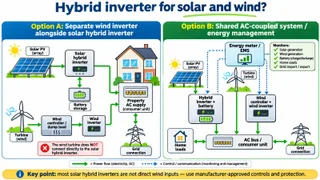
Can you use a hybrid inverter for solar and wind?
Yes. Solar panels and a wind turbine can supply the same property and, with compatible equipment, charge the same battery. If you already have solar panels, the usual starting point is to keep the solar hybrid inverter and connect the turbine to the property’s AC supply through its own wind controller and a compatible inverter. Connect a turbine directly to a hybrid inverter only if the manufacturer explicitly supports that turbine and input. Battery charging and operation during a power cut depend on the system layout, metering and supported operating modes.
Why a spare solar input is unsuitable for most turbines
A solar inverter’s maximum power point tracker is designed for the electrical behaviour of solar PV panels. A variable-speed turbine can generate AC whose voltage and frequency change with rotor speed. A rectifier can turn that output into DC, but the turbine still needs a controller and protection for gusts and for times when the inverter stops drawing power. Matching the nominal voltage is only one compatibility check.
Ask the installer for the exact turbine, controller and inverter models. They should explain how the turbine is controlled if the grid disconnects, the battery fills or its management system stops accepting charge. Depending on the turbine, the manufacturer may specify braking, a diversion load to absorb surplus energy or another way to limit rotor speed and voltage. If the installer proposes a direct connection, ask for the manufacturer’s wiring diagram and check which operating conditions it covers.
Will the turbine work during a power cut?
A grid-tied wind inverter on the mains side of a backup system normally disconnects when the grid fails. A battery inverter with a wired backup output can still supply selected circuits. Ask the installer to mark the turbine connection and the backed-up circuits on the system drawing so you can see what stays connected during a power cut.
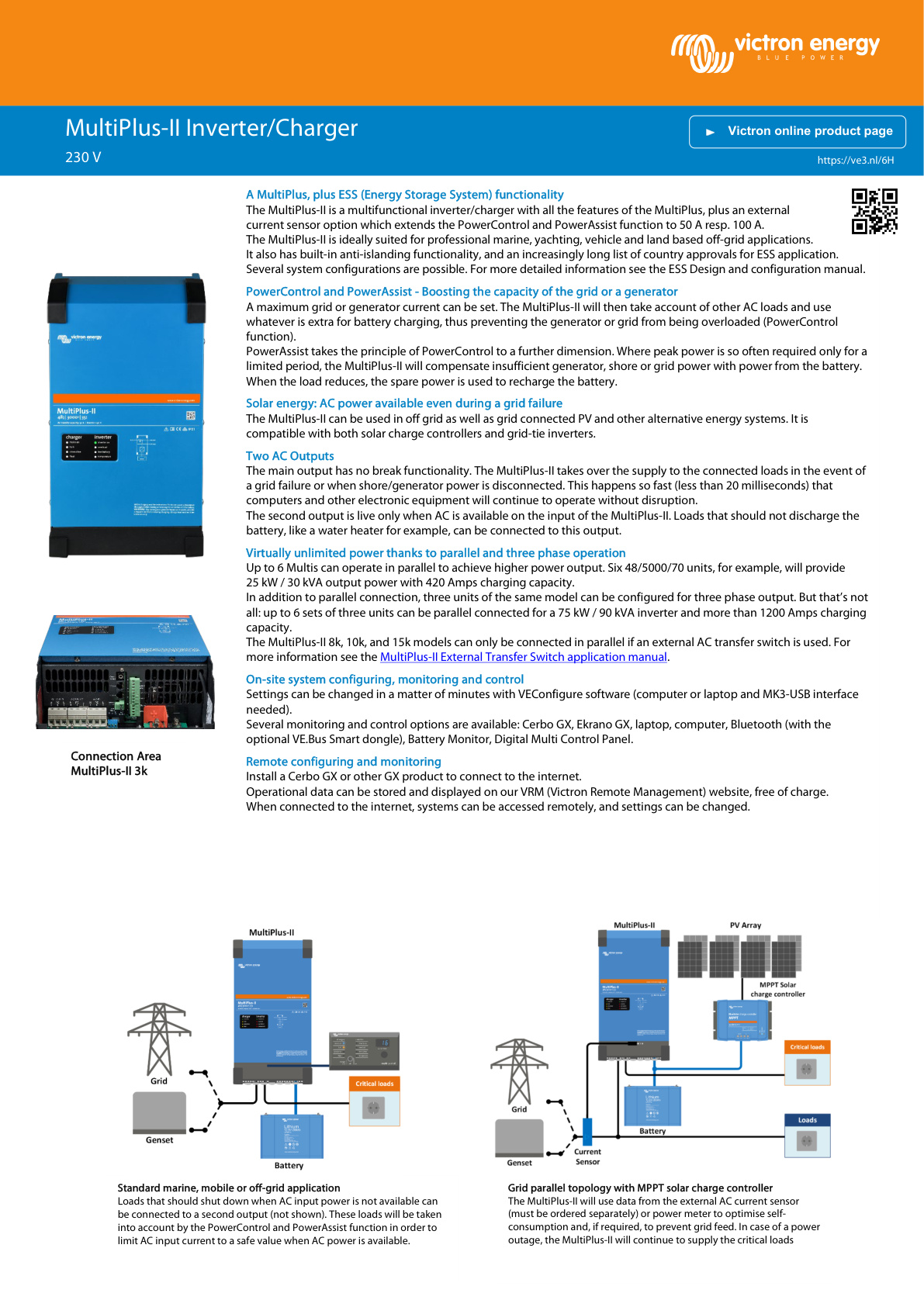
For AC-coupled generation to continue during a power cut, the battery inverter must establish a local AC supply. The generating equipment must be compatible with how the inverter controls that supply. Victron Energy’s *ESS Design and Installation Manual* shows a MultiPlus-II inverter/charger running the ESS Assistant with a grid-tie PV inverter on its AC output. The manual explains how frequency shifting limits PV output during islanded operation. For a wind installation, ask for documentation that covers the proposed wind inverter and turbine controller in that operating mode. Check what happens if generation exceeds demand and the battery reaches its charge limit.
Check the wind resource before choosing the inverter
An exposed site with space for a suitable mast is a better candidate for a small turbine than a roof surrounded by taller buildings or trees. Assess wind conditions at the proposed hub height. Buildings, trees and terrain can reduce wind speeds and increase turbulence. Check the space needed for the mast and foundations, access for installation and servicing, potential noise at neighbouring properties and the site’s planning requirements.
Ask for an annual energy estimate in kWh based on how often different wind speeds occur at hub height and on the proposed turbine’s power curve. The turbine’s rating in kW describes its power under specified conditions. To estimate how much wind generation you could use on site, compare the expected seasonal output with your electricity use. Ask what interval consumption data the installer used for the estimate. If the property is off-grid, ask how the system would cover demand through a spell of calm, overcast weather.
Confirm the grid connection route before ordering equipment
In Great Britain, give your distribution network operator (DNO) details of the proposed wind equipment and any existing solar and battery equipment. Ask your installer to confirm whether G98 or G99 applies and whether you need to apply before installation. The route depends on the site layout and on the capacity and characteristics of the equipment operating in parallel with the grid. See the Energy Networks Association’s G98 and G99 connection guide.
If the proposal relies on an export limit, ask the installer to confirm the applicable G100 requirements with the DNO. Check where export is measured at the grid connection point, how the system limits combined export from solar, wind and storage, and what happens if a meter or control link fails. Ask the installer to include any required commissioning tests in the quote. See National Grid Electricity Distribution’s guidance on customer export limitation schemes.
In Northern Ireland, check with NIE Networks whether G98/NI or G99/NI applies before ordering equipment. Give NIE Networks the full proposed layout, including any generation or storage already connected at the property. See NIE Networks’ generation connection guidance.
What to ask for in a solar and wind quote
Ask for a system drawing, an equipment schedule with model numbers and an itemised quote for the installation. Check that the quote covers the mast, foundations, cable route, turbine controller, electrical work and commissioning. For a retrofit, ask the installer to check space at the consumer unit or distribution board and mark where the battery meter and any export controls will go. Check the turbine, inverter and battery warranties separately. Find out who will service the turbine and what access they need.
Compare the combined proposal with a solar-only estimate using the same electricity use and tariff assumptions. Look at installed cost, expected annual generation, how much electricity you’re likely to use on site and what servicing each system needs. Ask the wind installer how much generation would fall if wind speeds at hub height were lower than assumed. Use that comparison to decide whether the turbine’s contribution justifies its installation and ongoing maintenance.
Solar comparison
Compare solar for your property
Enter your postcode to assess your roof, compare solar options and get quotes from UK installers.
- Free postcode start
- Home, business and industrial
- RoboMo™ maps your roof
See which panels fit your roof
Choose home, business or industrial, then enter your postcode. RoboMo maps the roof and ranks panel brands by fit.
1. Postcode Start the assessment for your property.
2. Pin the roof Mark the array on the map.
3. Compare RoboMo™ builds your options.

Battery ROI tool
See what a battery saves on your bill
Enter the day rate, off-peak rate and export rate. The calculator ranks batteries in the Kilowatts shop over 10 years. Home batteries also suit offices and small commercial sites.
Reading
Sources and further reading
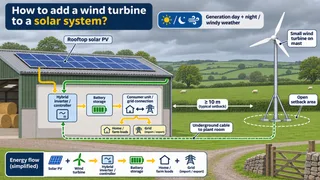
Adding a wind turbine to an existing solar system? Compare UK retrofit options and check wind exposure, inverter compatibility and grid connection.
Read article
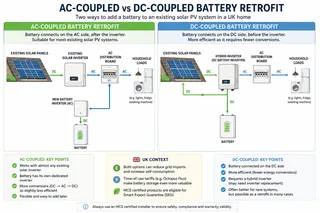
Read article
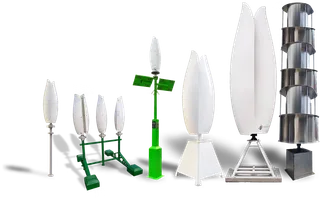
They need clean wind at the rotor, a safe mounting position, planning acceptability, suitable grid connection arrangements.
Read article
Read article

Mo's Solar Mission
Mo's Mission Nominations
Garlinge Primary School and Nursery
Garlinge Primary School and Nursery is a foundation primary school on Westfield Road in Margate, Kent, for children aged 3 to 11. It is m...
St Luke's Church of England Primary SchoolSt Luke's Church of England Primary School is a voluntary controlled Church of England primary school on Jubilee Road in Formby, Merseysi...
Comberbach Nursery and Primary SchoolComberbach Nursery and Primary School is a primary academy on Mather Drive in the village of Comberbach, near Northwich in Cheshire, for...
Locations
Solar installation near you
Write for Kilowatts.uk
Got a trade and something worth saying?
Write it here under your own name. Sign in, put a profile up, and start a guide. Pay only if you want more links from your articles out to your own site.
Register
Create a Kilowatts.uk account, or sign in if you already have one.
Author profile
Put your name, photo and experience on a public author page.
Start creating
Write a guide or a blog. Free authors can put one followed link to their own site in articles each month.
FAQ
Need Help? RoboMo's Got Answers
Can I add a wind turbine to my existing solar hybrid inverter system?
Yes, if the equipment and site are suitable. A common retrofit keeps the solar hybrid inverter and connects the turbine to the property’s AC supply through its own wind controller and compatible inverter. Ask your installer to show how the new equipment will work with your existing battery and any export controls.
Can I plug a wind turbine into a spare solar input?
Use a solar input for wind only if the inverter manufacturer explicitly supports the exact turbine and connection. Matching the nominal voltage is only one check. The turbine also needs a way to control rotor speed and voltage in gusts or when the inverter stops drawing power. Ask for the manufacturer’s wiring diagram and protection requirements.
Can solar panels and a wind turbine charge the same battery?
Yes, with compatible equipment. In an AC-coupled system, the battery must support charging from external AC generation, and its meter must be able to detect surplus wind power. In a system that uses separate solar and wind charge controllers, check that the battery supports both controllers and their combined charging current. Ask what happens to the turbine if the battery stops accepting charge.
Will my wind turbine keep generating during a power cut?
A wind inverter connected on the mains side of a backup system normally disconnects when the grid fails. For an AC-coupled turbine to keep generating, it needs to be connected to a compatible backup supply that can operate independently of the grid. Ask your installer to show which circuits stay powered and how the turbine is controlled if the battery fills during the outage.
Can I use solar and wind together in an off-grid home?
Yes. One option uses separate solar and wind charge controllers to charge a shared battery, with a battery inverter supplying the home. The installer should check how the turbine is controlled when the battery reaches its charge limit. Ask how the system would meet your electricity needs through several calm, overcast days.
How do I know whether a small wind turbine will generate enough at my home?
Ask for an annual generation estimate in kWh based on wind conditions at the proposed hub height and the turbine’s power curve. Nearby buildings and trees can reduce wind speeds and increase turbulence. Compare the expected seasonal output with your electricity use, and ask how the estimate changes if the site is less windy than assumed.
Do I need to contact my electricity network operator before adding wind to my solar system?
Ask your installer to confirm the grid connection route before you order equipment. In Great Britain, check with your distribution network operator whether G98 or G99 applies and whether you need to apply before installation. In Northern Ireland, check with NIE Networks about G98/NI or G99/NI. Provide details of the proposed turbine, existing solar and battery equipment, and any export limit.
What should I ask for in a quote for a combined solar and wind system?
Ask for a system drawing, exact equipment model numbers and an itemised quote covering the mast, foundations, cabling, controls and commissioning. Check what each warranty covers and who will service the turbine. Compare the quote with a solar-only proposal using the same electricity use and tariff assumptions, taking account of how much generation you could use at home and what each system costs to maintain.
Live help
Need help right now?
Talk to RoboMo™ and get instant answers.