


Octopus Plug-in Solar for Businesses: Does the Claimed 23% Saving Stack Up?
Published: 2026-11-23 17:28:59
Updated: 2026-11-23 09:29:44
See when Octopus plug-in solar can save UK small businesses 23% and how daytime electricity use and paid export affect bill savings and payback.
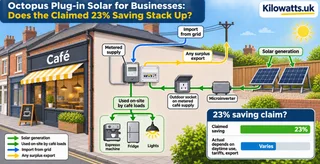
Does Octopus’s claimed 23% saving stack up?
Yes. Octopus plug-in solar for businesses can deliver a benefit worth about 23% of an annual electricity bill if the panels generate as forecast, the business uses most of that electricity on site during daylight and the surplus earns an export payment. In the example below, the benefit is 23.5% with paid export and 20.7% from avoided imports alone. Octopus assumes annual generation of 828 kWh at a site using 2,500 kWh. Its launch announcement leaves the tariff, on-site use and treatment of standing charges unspecified. Octopus Energy’s business launch announcement
Solar electricity you use on the premises cuts the amount you buy from the grid. Surplus can earn a separate payment if you have an export agreement. A café with refrigeration running throughout the day may avoid more imports than an evening venue with the same annual consumption.
What the Octopus plug-in solar kits cost and produce
At the November 2026 business launch, Octopus quoted £450 for a one-panel kit and £650 for two panels. Each panel is rated at 460 W, giving the two-panel kit a combined DC rating of 920 W. The microinverter converts DC to AC for use on the premises. Great Britain’s interim product specification limits the AC output of a qualifying plug-in device to 800 VA. These are power ratings. The 828 kWh in Octopus’s example measures the energy the panels are expected to generate over a year. Octopus Energy’s launch prices and assumptions · Government interim product specification
Ask for an annual yield estimate for the spot where you can mount the panels. Orientation, mounting angle and shade from neighbouring buildings all affect output. The panels collect light on both sides, so the back of a panel mounted close to a dark wall may receive less reflected light than it would on an open stand. If the second panel would sit in a shadier spot, ask how much extra electricity it would generate there over a year.
How to work out your bill saving and payback
Start with Octopus’s figures of 828 kWh of annual generation and 2,500 kWh of annual consumption. At an illustrative import rate of 30p/kWh, your bill before solar would be £900, including £750 for imports and £150 in standing charges. The example assumes an export rate of 12p/kWh, uses a consistent VAT basis and calculates simple payback on the £650 launch price of the kit alone. Use your own tariff rates when estimating savings for your premises.
If you use 75% of the generation on site, 621 kWh saves £186.30 in import charges. The remaining 207 kWh earns £24.84 at the assumed export rate. The combined annual benefit is £211.14, or 23.5% of the bill before solar, with a simple payback of 3.1 years. With zero export income, the benefit is £186.30, or 20.7%, and payback is 3.5 years.
If you use 35% on site, you save £86.94 in import charges and earn about £64.58 from export. The combined benefit is £151.52 a year, or 16.8% of the bill before solar, with a payback of 4.3 years. With zero export income, the benefit falls to £86.94, or 9.7%, and payback extends to 7.5 years. Recovering the £650 kit price in three years takes about £217 a year, so a benefit worth 23% of your bill may still fall short of a three-year payback. For your own estimate, compare a year of half-hourly meter readings with estimated solar generation for the same intervals. Use the lower of demand and generation in each interval to approximate how much solar electricity you use on site. The remaining generation is potential export. Apply the import price in force for each interval, especially on a time-of-use tariff. Check weekends and seasonal closures separately, then divide the annual benefit by your full bill before solar, including standing charges. Use the same VAT basis for all costs and benefits. Octopus names Panel Power as an export option for businesses. The tariff page lists an Octopus Energy for Business supply and a working smart meter or other export-compatible meter among its eligibility conditions. Before budgeting for export, ask Octopus to confirm in writing whether your exact kit and meter qualify, which documents it needs and when payments can start. Ask whether it accepts the kit’s ENA type-test reference and DNO registration record and whether it requires further certification. Use the zero-export figures until you have that confirmation. Octopus Energy’s Panel Power eligibility terms
Which small businesses are a good fit for plug-in solar?
Look for a sunny, secure mounting position and enough daytime demand to use the output. Annual consumption alone is a poor guide. Check which equipment draws power around midday on typical trading days and on days you close.
Overview
A small kit may suit a tenant with a usable yard and limited scope for building work. If you have a suitable roof, a long lease and substantial daytime demand, get a quote for a professionally designed rooftop system as well. Use the same meter data and tariff assumptions for both options, with a generation profile specific to each design.
What to check before plugging in a solar kit
For a qualifying plug-in system in Great Britain, the local distribution network operator (DNO) must be notified. Octopus’s household kit guide says the buyer registers the device after delivery through the Energy Networks Association (ENA) Plug-in Solar Registration portal at myplugin.solar. The portal forwards the details to the DNO. Octopus’s business launch announcement leaves the route and timing for commercial premises unspecified. Before connecting, ask Octopus for the exact kit’s entry on the ENA Type Test Register and written instructions confirming who files the notification, which route applies to your business meter and when to file it. Keep the submission acknowledgement. Octopus plug-in solar kit guide
If the premises already have rooftop solar or battery storage, contact the DNO before adding the kit. Give it the existing inverter ratings, the proposed kit details and any agreed export limit. Ask whether the addition needs prior approval or changes to the existing connection arrangements. The DNO handles the network connection, and your supplier handles the export tariff. Octopus plug-in solar kit guide
Check that the supplied cable reaches a suitable weatherproof socket on the correct metered supply without crossing a customer walkway or passing through a door or window. Plug the supplied cable directly into the socket and follow the kit instructions on mounting and clearances. The interim specification excludes extension leads and adaptors. If you are unsure about the condition of the socket or circuit, ask a qualified electrician to assess it. Check that the mount and fixings suit the surface and wind exposure, and agree any wall fixings or use of shared outdoor space with the landlord. Government interim product specification · Octopus plug-in solar kit guide
Compare the full cost before ordering
Get an annual yield estimate for each plug-in solar kit size at your site and an all-in price that includes VAT, delivery, mounting and any socket work. Ask what each warranty covers for the panels and the microinverter. To judge the value of the second panel, work out how much of its output you can use after the first panel has met part of your daytime demand. If most of the extra generation would go to the grid, the value of the second panel will depend more on the export rate and whether you qualify for it.
Use your actual tariff and half-hourly readings to compare payback with and without export income. If the purchase depends on paid export or high daytime use, confirm your tariff eligibility and check your daytime demand before ordering.
Solar comparison
Compare solar for your property
Enter your postcode to assess your roof, compare solar options and get quotes from UK installers.
- Free postcode start
- Home, business and industrial
- RoboMo™ maps your roof
See which panels fit your roof
Choose home, business or industrial, then enter your postcode. RoboMo maps the roof and ranks panel brands by fit.
1. Postcode Start the assessment for your property.
2. Pin the roof Mark the array on the map.
3. Compare RoboMo™ builds your options.

Battery ROI tool
See what a battery saves on your bill
Enter the day rate, off-peak rate and export rate. The calculator ranks batteries in the Kilowatts shop over 10 years. Home batteries also suit offices and small commercial sites.
Reading
Sources and further reading

A smart meter keeps import and export in two separate registers, so exported units never cancel imported ones. Here is what that means for UK solar homes.
Read article

An EV is a large, flexible electrical load. Here's how UK home charging changes solar self-consumption, sizing decisions and long-term system value.
Read article
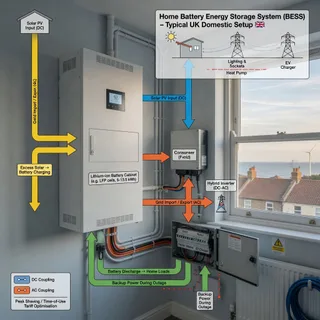
There is no single Kent payback for home battery storage. Compare usable evening energy, tariffs, UK Power Networks and a lawful place to site it.
Read article
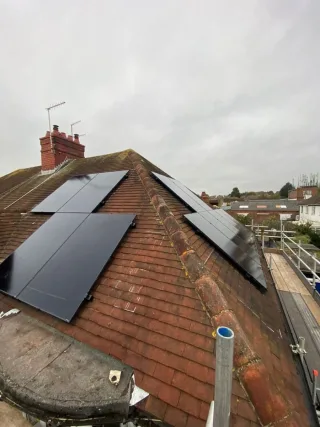
An export limit caps what your solar sends to the grid, not what your home uses. Here is how UK inverters manage surplus, and why annual losses stay small.
Read article


Mo's Solar Mission
Mo's Mission Nominations
Garlinge Primary School and Nursery
Garlinge Primary School and Nursery is a foundation primary school on Westfield Road in Margate, Kent, for children aged 3 to 11. It is m...
St Luke's Church of England Primary SchoolSt Luke's Church of England Primary School is a voluntary controlled Church of England primary school on Jubilee Road in Formby, Merseysi...
Comberbach Nursery and Primary SchoolComberbach Nursery and Primary School is a primary academy on Mather Drive in the village of Comberbach, near Northwich in Cheshire, for...
Locations
Solar installation near you
Write for Kilowatts.uk
Got a trade and something worth saying?
Write it here under your own name. Sign in, put a profile up, and start a guide. Pay only if you want more links from your articles out to your own site.
Register
Create a Kilowatts.uk account, or sign in if you already have one.
Author profile
Put your name, photo and experience on a public author page.
Start creating
Write a guide or a blog. Free authors can put one followed link to their own site in articles each month.
FAQ
Need Help? RoboMo's Got Answers
Can Octopus plug-in solar really save a small business 23% on electricity?
In the article’s worked example, a two-panel kit generates 828 kWh a year and the business uses 75% of it on site. Avoided imports and paid export together are worth 23.5% of the original annual bill, including standing charges. With no export income, the saving is 20.7%. Standing charges still apply.
How long could the two-panel kit take to pay for itself?
Using the £650 launch price and the article’s assumption that you use 75% of generation on site, simple payback is about 3.1 years with paid export and 3.5 years without it. If you use only 35% on site and receive no export payments, payback stretches to about 7.5 years. Use your own tariff and an all-in quote that covers VAT, delivery, mounting and any socket work.
How can I tell whether my premises will use enough solar electricity?
Compare a year of half-hourly meter readings with estimated solar output for the same intervals. The lower of demand and generation in each interval gives an estimate of how much solar electricity you could use on site. Include weekends and seasonal closures, when your daytime demand may be lower.
Is it worth buying two panels instead of one?
Ask for a generation estimate for each kit size based on the available mounting positions, including shade, orientation and angle. The second panel is worth more if you regularly have daytime demand left over after the first panel’s output is used. If most of the extra electricity would go to the grid, compare the additional cost with the export income you can confirm.
Will Octopus pay my business for surplus electricity?
Octopus names Panel Power as a business export option. Ask Octopus to confirm in writing whether your exact kit, meter and supply qualify, what documents it needs and when payments can start. Budget for zero export income until eligibility is confirmed.
Do I need to tell the local electricity network operator before connecting the kit?
For a qualifying plug-in system in Great Britain, the local distribution network operator (DNO) must be notified. Ask Octopus for the kit’s ENA Type Test Register entry and written instructions on who submits the notification, which route applies to your business meter and when to submit it. If you already have solar panels or battery storage, contact the DNO before adding the kit to check your existing connection arrangements.
Can I use a plug-in solar kit at rented business premises or on a shared supply?
Check which meter serves the socket and ask your landlord how lower grid imports would affect what you pay. Agree any wall fixings or use of shared outdoor space before ordering. Check that the supplied cable reaches a suitable socket directly, without an extension lead or adaptor, and ask a qualified electrician to assess the socket or circuit if you are unsure.
Live help
Need help right now?
Talk to RoboMo™ and get instant answers.