


Plug-in sodium-ion battery being developed for homes without solar
Published: 2026-10-04 10:24:46
Updated: 2026-10-04 03:28:19
A plug-in sodium-ion battery for homes without solar is in development, not on sale. UK grid rules may still block a simple wall-socket connection.
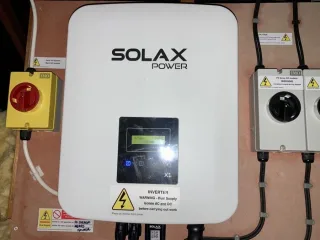
Plug-in sodium-ion battery being developed for homes without solar
How renewable energy work, typical output, costs and limits, and whether they have a future for UK homes, balconies and businesses.
A plug-in sodium-ion battery is not available to buy
A plug-in sodium-ion battery for homes without solar is not on sale. A British household cannot treat a funding announcement as permission to plug one into a wall socket. In early October 2026, German company Revolta said it had secured European Regional Development Fund support to develop a plug-and-play alternating-current sodium-ion battery, with renters, smaller properties and homes that cannot fit panels in mind. The stated aim is to charge when unit rates are low and discharge when they rise. That is a development project. It is not type-testing, a distribution network operator notification, or a retail price.
Capacity, inverter power, efficiency, dimensions, connector type and warranty for this alternating-current unit have not been published. Until they are, nobody can judge whether the connection would fall under ENA Engineering Recommendation G98 or G99, or whether any saving would survive round-trip losses. European Regional Development Fund support can help a firm build and test a prototype. It does not approve an inverter, notify a British network operator, or create a product a renter can lawfully install.
The claim rests on Revolta’s own early October 2026 statement about that funding, not on a published product standard or a UK certificate. Recheck the position when a datasheet exists. Issue dates, type-test references and distribution network operator forms change, and a later document would supersede a news peg.
Why the pitch is aimed at homes without solar
Most domestic batteries fitted in Britain are designed around rooftop solar and a professional install. The battery charges when the array produces more than the house is using, then covers evening demand so less electricity is imported later. That model does not fit a flat with no usable roof, a rented home where the landlord will not approve panels, or a small property where scaffolding and a consumer-unit upgrade would dominate the job. Where a roof can take panels, compare solar panel options before treating a plug-in battery as the substitute.
A sodium-ion battery without solar would have to earn its keep by importing electricity in cheaper periods and releasing it when the household would otherwise pay a higher rate. Time-of-use tariffs already exist in Britain, including half-hourly products, so the commercial idea is not imaginary. The difficult part is the hardware and the connection rules, not the existence of cheap and expensive hours. A separate look at storage without rooftop solar shows why that gap is harder to close than a solar-charged battery.
Renters are the sharper test. A product that needs a dedicated circuit, an isolator and a network application is not something most tenancy agreements allow a tenant to arrange alone. A unit that truly needed no permanent alteration would look more realistic for that audience, but only if “no alteration” still satisfied electrical safety and grid-connection rules. Those requirements often pull in opposite directions. A battery aimed at renters can sound like an appliance. Anything that operates in parallel with the mains is closer to microgeneration than to a kettle, even if the household has no panels at all. How home batteries work is the useful baseline before any plug-in claim.
How a narrow unit-rate gap loses to round-trip losses
Grid-price arbitrage means the battery imports during a cheap window and later supplies ordinary loads so the household imports less during an expensive window. The gross saving is the price difference multiplied by the kilowatt-hours actually delivered to those loads. It is not the cheap price multiplied by a nameplate capacity.
Two conversions sit in an alternating-current design. Charging turns mains alternating current into direct current for the cells. Discharging turns that direct current back into alternating current for the house. Each stage loses some energy, and the pack also uses a little power while it waits. Round-trip efficiency is the share of imported kilowatt-hours you get back as usable output. Revolta has not published that figure for the proposed unit, so no annual saving can be calculated from the October 2026 announcement.
This is a method sketch, not a forecast, and it uses no assumed tariff or efficiency. Call the cheap unit rate C and the dearer unit rate E. Import one kilowatt-hour in the cheap window. Only the unpublished round-trip share of that kilowatt-hour comes back as usable output. The margin on that kilowatt-hour is that share multiplied by E, minus C. If E is only a little higher than C, the energy lost in the two conversions can be worth more than the gap, and the margin disappears before the battery has contributed anything toward its capital cost. Standing charges sit outside that sum. They do not shrink because a battery cycles. The same arithmetic is why calculating battery payback has to start from usable output, not nameplate capacity. Using cheap stored electricity inside the home is not the same as exporting it for a payment. A supplier’s export tariff is generally built around renewable generation, not around reselling imported units. Some tariffs restrict battery export, or will not pay a premium for electricity that was bought from the grid hours earlier. Until a specific tariff’s terms say otherwise, the realistic case is load-shifting for your own use. On a British bill, the “network charges” in the German project description are usually buried inside the unit rate, rather than shown as a separate line a household can arbitrage on its own.
Sodium-ion does not turn a fire claim into a certificate
Sodium-ion cells use sodium rather than lithium as the main working ion. For a battery that sits in a hallway or cupboard, that is a materials difference, not a reason to ignore the rest of the system. Sodium is more widely available than lithium, and this class of cell is generally discussed as avoiding nickel and cobalt as well. Lower energy density is often acceptable in a stationary unit: the pack may be bulkier for the same stored kilowatt-hours, but it does not have to move. In a small flat, that bulk is a practical constraint, not a footnote.
It does not follow that a future sodium-ion battery would automatically be greener across its whole life. Cell manufacturing still uses energy and other materials. Cycle life, recycling routes and how many years the inverter lasts all change the result, and none of those figures has been published for this alternating-current project. Lithium iron phosphate remains the chemistry most British home-storage jobs actually use today. Type-tested inverters, installer practice and network paperwork are built around products that already exist. A future sodium-ion unit would have to earn that paperwork. It would not inherit it from a laboratory comparison.
Revolta has described the cells as non-flammable and has said the product should present no fire risk. That is a company statement, not a published certification result. The direct answer on the fire claim is that nobody outside the project can verify it yet. Installers and insurers look for independent test evidence on the whole unit, including the inverter, the enclosure, the connection and what happens if the unit is damaged, moved between tenancies or left in a tight cupboard. A safer cell chemistry does not remove the need for correct circuit protection. There is no public certification pack against which an insurer can judge the claim. Wider home battery safety checks still apply to products that are already on sale.
Do not mix the 450 volt DC stack with this idea
Revolta’s development announcement sits beside a different product. The company has said it is preparing deliveries of a direct-current sodium-ion battery built from modular 2 kilowatt-hour units, scalable to 20 kilowatt-hours, at a nominal 450 volts. That is a high-voltage storage stack of the kind that belongs on the direct-current side of a hybrid or dedicated battery inverter, commissioned by someone qualified to work at that voltage. Nominal 450 volts direct current is an installation voltage, with isolation, labelling and shock protection designed in from the start. It is not a plug-in voltage.
The newly funded alternating-current battery is a future product, not that system entering production. An alternating-current design would include its own inverter and would sit on the household’s alternating-current side, which is the only reason plug-and-play language appears at all. Nothing in the public project description says the alternating-current unit uses 2 kilowatt-hour modules, reaches 20 kilowatt-hours, or runs at 450 volts. Borrowing those numbers would mislead a buyer and could cause someone to underestimate the electrical risk of the direct-current product.
If a page shows modular high-voltage direct-current storage, treat it as a professionally installed battery, very likely alongside solar or a hybrid inverter, and expect a site survey, a consumer-unit check and a distribution network operator process. If a page describes a small alternating-current unit for homes without solar, treat every performance claim as unpublished until there is a datasheet. There is no basis in the announcement for assuming the direct-current stack is offered, certified or supported for British installations. The two products can share a company name and a cell family without sharing a connection method.
A 13 amp socket is the wrong interface
No. A 13 amp socket is not a lawful or sensible connection for sustained operation in parallel with the mains, and this announcement does not create an exception. Britain already allows small generation and storage, but the route is an approved interface with the grid, not a marketing phrase. Socket outlets are not generation connection points. A unit that only charged from a plug and never operated as a source might look simpler. A unit that pushes power back out of a socket is a different and more serious design.
A 13 amp BS 1363 plug is also a poor way to move power for hours. The British Standard BS 1363 covers 13 amp plugs, socket-outlets, adaptors and connection units. Contacts and the plug fuse run hot under sustained high load, and a ring final circuit was not designed as a dedicated generation circuit. Grid-tied batteries fitted in Britain today are hard-wired to a dedicated way in the consumer unit, with a lockable isolator. That arrangement gives a defined cable, a protective device and a means of isolation. A plug does not.
On a survey, the first physical checks are spare ways in the consumer unit, the condition of that board, the earthing arrangement, whether the supply is looped with a neighbour, and whether that part of the network is already constrained. An older board with no spare way, or one that cannot take a suitable protective device, changes the job before anyone discusses chemistry. Any of those findings can turn a modest battery into a delay or a refusal. A plug-in label does not answer them.
G98 or G99 cannot be chosen until a datasheet exists
Storage that can operate in parallel with the mains is plant that distribution network operators assess under Energy Networks Association Engineering Recommendations. Which route applies depends on inverter rating, whether the equipment is fully type-tested, and whether the connection is straightforward. Revolta has not published inverter power, so it is not yet possible to say which process this project would fall under. A product cannot skip that distinction by being small, portable, or aimed at people without solar.
The documents to read, in their current issue, are ENA Engineering Recommendation G98, on requirements for the connection of fully type-tested micro-generators up to 16 amps per phase in parallel with public low-voltage distribution networks; ENA Engineering Recommendation G99, on requirements for the connection of generation equipment in parallel with public distribution networks; and ENA Engineering Recommendation G100, on technical requirements for customer export limitation schemes. G98 is the usual notification route for fully type-tested single-phase equipment up to 16 amps, which is 3.68 kilowatts. It is still a formal connection. The distribution network operator is told, and it can raise concerns where the local network is already constrained. G99 is the application route for larger plant, for equipment that is not type-tested under the simpler route, and for many more complex arrangements. Where G99 applies, connecting before approval is not a minor admin slip.
Anti-islanding sits inside that interface. If the street supply fails, a battery inverter must stop energising the installation, so a cable which linespeople believe is dead is not being back-fed. Export limitation is the next unanswered question. If the unit can export, the network operator may require that export be capped, sometimes through an approved export-limitation arrangement of the kind covered by G100, or by setting the inverter so it does not export. Zero export is often the cleaner setting for a grid-charging battery whose value is indoor use, but only if the controls hold that limit when the house load drops suddenly. These are the items that must be published before anyone can judge the route.
Recheck those ENA recommendations, BS 1363, and the product datasheet at the time of any real enquiry. This article is not a substitute for the current ENA text or a distribution network operator’s published process. MCS paperwork, where it is relevant at all, belongs to generation and storage installations that are actually being commissioned. A funding award does not create it, and a grid-only arbitrage unit should not be assumed eligible for renewable export payments.
What Part P and a competent person mean for a hard-wired unit
A first lawful British version, if one appears, is more likely to be fixed wiring than a portable appliance. Fixed wiring is designed and certified against BS 7671, the IET Wiring Regulations, in the edition current at the time of the work. That covers protection, earthing, isolation, cable sizing, labelling and how the new circuit sits with the rest of the installation. It is separate from the distribution network operator’s G98 or G99 decision. Both can apply to the same job.
In England, electrical safety in dwellings is covered by Part P of the Building Regulations. Adding a new circuit is the sort of work that is notifiable. In practice, notification looks like one of two routes. A person registered with a government-authorised competent person scheme carries out the work and notifies building control on the householder’s behalf, or the work is notified to building control before it starts so the local authority can oversee it. “Competent person” here means someone qualified to design and install that circuit and, where they are using the self-certification route, registered to notify it. It does not mean a householder who is confident with a plug. Hiring starts with a qualified electrician, not a product brochure.
Scotland, Wales and Northern Ireland do not copy England’s Part P text exactly, so the form of building-control notification has to be checked locally. Nothing in the Revolta announcement determines that a future unit would be notifiable, because the connection method is unpublished. The point is narrower. If the lawful interface is a dedicated circuit, the household should expect BS 7671 design, a lockable isolator, and a building-regulations notification route, not a shop receipt. An owner-occupier has more freedom to alter the installation than a tenant, but still needs that competent person to confirm the circuit, the earthing and whether prior network application is required.
How the unpublished unit compares with a surveyed battery
A surveyed home battery and the proposed plug-in concept are not at the same stage of evidence. One can be specified against a datasheet, a type-test reference and a consumer unit. The other is a funding announcement. The comparison below is a decision frame for that gap. It is not a verdict on hardware that does not yet have a published specification, and it does not invent a price for either option.
Overview
It is not buyable. A first lawful UK version, if one appears, is more likely a small hard-wired, type-tested alternating-current battery than a 13 amp appliance. If a later model is fully type-tested, hard-wired, set so it does not export, and accepted by the landlord and insurer, several of these gaps close. If it relies on back-feeding a socket, and on being paid to export cheap imported electricity, they do not.
What a UK household should do now
Do not buy a plug-in sodium-ion battery on this news, and do not socket-connect any storage device in the hope that the announcement has made it acceptable. There is no retail product here to order, and there is no published inverter rating or type-test evidence on which a distribution network operator could be asked for a connection decision. Commission a connection check only for a named product that has those documents. Asking an electrician to “see if a future plug-in unit would be all right” is not a useful survey.
Landlord consent and insurer acceptance still matter, including for a renter who likes the idea and including for anything later described as plug-in. Read the tenancy agreement before assuming a heavy electrical unit is allowed. Ask the insurer what they need to know about stationary batteries and about any product whose fire behaviour is still only a manufacturer statement. An owner-occupier does not need landlord consent, but disclosure to the insurer can still matter if the unit changes fire risk or is fixed to the building. None of that consent replaces G98, G99 or BS 7671.
The useful work, while this remains a watch item, is on your side of the meter. If the supplier provides half-hourly use, look at a few ordinary weeks and see whether the expensive hours contain enough energy to fill a small battery, and whether the cheap and expensive unit rates are actually far apart. A battery cannot save money on demand that is not there. A household on a flat tariff, or with very little evening load, may have no case for storage at all. A small inverter may not cover a kettle, an oven and a heat pump together, so much of the expensive import can remain untouched even after a battery is installed. When a datasheet does appear, compare usable kilowatt-hours, charge and discharge power, round-trip efficiency, cycle warranty and price together, and ignore export income unless your own supplier’s current terms allow that use. Do not use the direct-current product’s 2 kilowatt-hour modules, 20 kilowatt-hour maximum or 450 volt nominal rating as a stand-in. Do not assume a plug-in unit will run during a power cut. Backup is a separate design, with its own changeover arrangement, and this announcement does not establish it. Homeowners who can alter the wiring, and who want storage now, are still in the existing market: a surveyed, hard-wired battery, sized to measured use, with the connection route agreed before anyone orders equipment. A free home energy survey is the practical next step for that existing route.
Plan, Compare & Buy Renewable Energy Solutions
AI does the thinking.
You get the perfect solar match.
Use RoboMo™ to assess your property, compare available technologies and connect with trusted UK installers, suppliers and manufacturers.
Simply enter your postcode, drop a pin on your roof, create your free account and let RoboMo™ analyse your property to find the best solar panels for your home.

You don't have to think
RoboMo™'s AI analyses your roof and does all the hard work.

Accurate & tailored
AI-powered assessment based on your roof, location, and conditions.

Best options, maximum savings
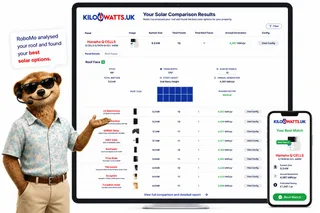
Compare top solar panels for the best performance and value.

Simple, fast & effortless
Provide a few details, sit back and watch your results unfold.
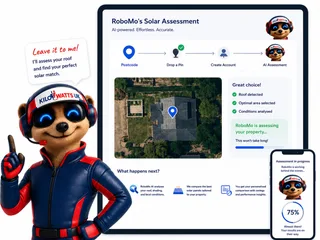
STEP 1
Choose Home, Business or Industrial
Enter your postcode to start your assessment.
STEP 2

Drop a pin on your roof
STEP 3

See your comparison
STEP 4

Sit back and watch RoboMo™ work
RoboMo™ analyses your roof and builds your personalised solar comparison.
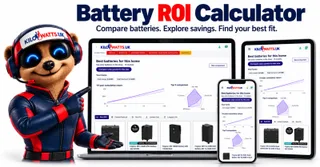
BATTERY ROI TOOL
See what a battery saves on your bill
Enter the day rate, off-peak rate and export rate. The calculator ranks batteries in the Kilowatts shop over 10 years.
Home batteries also suit offices and small commercial sites. Industrial batteries are listed on their own calculator.
Sources & further reading


Mo's Mission Nominations
FAQ
Need Help? RoboMo's Got Answers
Can I buy a plug-in sodium-ion battery for a home without solar?
No. The alternating-current sodium-ion battery described in Revolta’s early October 2026 funding announcement is a development project, not a product on sale. Capacity, inverter power, efficiency, dimensions, connector type and warranty have not been published. A British household should not treat that announcement as permission to plug anything into a wall socket.
Does European Regional Development Fund support mean the battery is approved for UK homes?
No. That support can help a firm build and test a prototype. It does not type-test an inverter, notify a British distribution network operator, or create a product a renter can lawfully install. The claim rests on the company’s own statement, not on a published product standard or a UK certificate. Recheck the position when a datasheet exists.
Would this battery suit renters or flats that cannot fit solar panels?
That is the stated audience, but it is not a product they can fit today. Most domestic batteries in Britain are designed around rooftop solar and a professional install, which does not suit every flat, rental or small property. A unit that needs a dedicated circuit, an isolator and a network application is not something most tenancy agreements allow a tenant to arrange alone. Anything that operates in parallel with the mains is closer to generation plant than to an ordinary appliance, even with no panels.
Can a battery without solar save money by charging on cheap rates?
Time-of-use tariffs already exist in Britain, so the commercial idea is real. The saving is the price gap on kilowatt-hours actually delivered to household loads, after charging and discharging losses, not the cheap rate times nameplate capacity. Revolta has not published round-trip efficiency, so no annual saving can be calculated from the announcement. If the dearer rate is only a little higher than the cheap rate, conversion losses can wipe out the margin. Standing charges do not fall because a battery cycles.
Can I export cheap stored electricity and get paid for it?
Do not assume so. A supplier’s export tariff is generally built around renewable generation, not around reselling electricity that was imported from the grid. Some tariffs restrict battery export or will not pay a premium for units bought earlier. Until a specific tariff’s terms say otherwise, the realistic case is using the stored electricity in your own home.
Is a sodium-ion battery automatically safer or greener than lithium storage?
Sodium-ion uses sodium rather than lithium as the main working ion, and this class of cell is often discussed as avoiding nickel and cobalt. That is a materials difference, not a certificate. Revolta has described the cells as non-flammable, but that is a company statement, not published independent test evidence on the whole unit. Cycle life, recycling routes and inverter life have not been published for this project. Lithium iron phosphate remains the chemistry most British home-storage jobs use today.
Is the funded plug-in unit the same as Revolta’s 450 volt modular battery?
No. The company has also described a direct-current sodium-ion stack of modular 2 kilowatt-hour units, scalable to 20 kilowatt-hours, at a nominal 450 volts. That is high-voltage storage for a professionally commissioned inverter, not a plug-in voltage. Nothing in the public description of the alternating-current project says it uses those modules, that capacity or that voltage. Do not borrow those figures for the plug-in idea.
Could it simply plug into a 13 amp socket, and which grid rules would apply?
A 13 amp socket is not a lawful or sensible connection for sustained operation in parallel with the mains, and this announcement does not create an exception. Grid-tied batteries fitted in Britain are normally hard-wired to a dedicated way in the consumer unit, with a lockable isolator. Which of ENA Engineering Recommendations G98 or G99 would apply cannot be known until inverter rating and type-test status are published. G98 is still a formal notification route, and where G99 applies, connecting before approval is not a minor paperwork slip.