


Tigo optimiser: the short answer for UK homeowners
Published: 2026-08-30 22:59:37
Updated: 2026-09-03 23:43:37
A Tigo optimiser is a module-level device fitted behind a solar panel to reduce mismatch losses in a string inverter system.
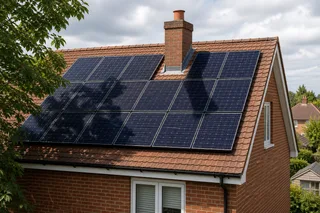
tigo optimiser - UK homeowner guide
Learn tigo optimiser with UK-specific guidance, including costs, savings, rules, and what to do next.
Tigo optimiser: the short answer for UK homeowners
A Tigo optimiser is a module-level device fitted behind a solar panel to reduce mismatch losses in a string inverter system. For a UK homeowner, it is most useful where a few panels are affected by chimneys, dormers, trees, aerials or nearby buildings. It is unlikely to add much on a simple, unshaded roof.
The key limit is simple: an optimiser cannot create sunlight. It can help stop one weaker panel restricting other panels in the same string, but only if the system design, inverter compatibility, roof access and Tigo product choice are right.
In practice, Tigo is often considered for selective optimisation. That means an installer may fit units only to the panels expected to underperform, rather than fitting one to every module by default. This can suit UK roofs where shade is localised and changes during the day.
What a Tigo optimiser actually does
A Tigo optimiser is a DC power electronics device installed at panel level, usually beneath the solar panel on the mounting rail. It normally works with a central string inverter, so the panels still feed one inverter rather than each panel having its own microinverter. Its role is to manage mismatch. Mismatch happens when panels in the same string are not behaving equally because one is shaded, dirty, ageing differently, facing a slightly different direction, or operating at a different temperature. A weaker panel can reduce the output of the wider string if the design does not deal with that difference well. If you are new to the basics, it helps to understand how solar panels work before comparing optimiser options. Not every Tigo TS4 product provides the same function. A quote that simply says “Tigo fitted” is not specific enough. It should identify the exact TS4 model, what function it provides, and whether any extra communication equipment is included.
Overview
Tigo’s own TS4 datasheets and installation documentation should be checked by the installer before specification. The important details include module electrical ratings, inverter compatibility, connector type, string voltage and current limits, and whether monitoring hardware is required for the homeowner view being promised.
When Tigo optimisers are worth considering
Tigo is most likely to be worth considering when only part of an array is affected at certain times of the day. A chimney shadow crossing two panels in the morning is a different problem from a whole roof being shaded by a large tree for most of the winter day. Optimisers can reduce some knock-on losses, but they do not remove the underlying loss caused by shade. They can also be useful where a roof is awkward. UK homes often have dormers, extensions, split roof planes and limited usable space. A good designer should first look at string layout, inverter MPPT inputs and roof-plane grouping, then decide whether selective optimisation improves the design. Careful solar panel placement is still the first step before adding extra electronics.
Overview
The main decision is not whether Tigo is “good” or “bad”. It is whether the roof has a specific mismatch problem that the optimiser is likely to reduce. On many straightforward south-facing or east-west roofs with no meaningful shading, a standard string inverter design may be perfectly sensible.
Tigo, SolarEdge and microinverters are not the same thing
Tigo is often compared with full optimiser systems and microinverters, but the architecture is different. With Tigo, the system normally still uses a central string inverter, and selected panels may be fitted with optimisers where they are useful. A full optimiser system is usually designed around optimiser hardware across the array, while microinverters convert DC to AC at each panel.
This difference matters for cost, design and maintenance. Selective optimisation can be attractive on a retrofit where only two or three panels are shaded, but it depends on compatibility and installer competence. A microinverter or full optimiser approach may be considered for more complex roof designs, but it is not automatically better for every home.
The best comparison is made at design stage. The installer should look at shade timing, panel layout, cable runs, inverter MPPTs, export requirements and future maintenance access before deciding whether Tigo, a standard string inverter, a full optimiser system or microinverters are appropriate.
How selective Tigo optimisation works in a string system
Selective optimisation means the installer identifies panels that are likely to suffer mismatch and fits Tigo devices only to those modules. The rest of the array remains unoptimised and still operates through the central string inverter. This is one of the main reasons Tigo is considered on complex UK roofs. This approach only works well if the shaded panels, string layout and inverter operating window are understood. If the wrong panels are selected, or if the inverter and string design are unsuitable, the extra hardware may not solve the real performance issue. A homeowner should expect the installer to explain which panels are being treated and why. A roof plan, shade note or system design drawing is more useful than a generic claim that optimisers improve solar generation.
Retrofitting Tigo to an existing UK solar system
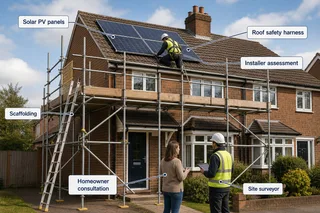
Retrofitting Tigo optimisers can be possible, but it involves more than clipping on a small device. The installer may need safe roof access, panel lifting, connector checks, DC testing and confirmation that the existing inverter and string design are compatible. If scaffolding is required, access can become a major part of the overall job.
Older systems need extra care. Connectors, cable condition, panel electrical characteristics and inverter operating ranges should be checked before any optimiser is specified. Mixing DC connectors incorrectly or assuming compatibility without checking the datasheet can create avoidable reliability, warranty and safety problems.
A retrofit also needs a clear reason. If the system is underperforming, the first step is to diagnose why. Shade, inverter faults, string faults, soiling, panel failure and monitoring errors can look similar to a homeowner viewing monthly generation figures. Benchmarking against what panels are likely to produce can help, so review solar electricity generation before assuming Tigo is the fix.
A sensible installer will not promise a fixed uplift without inspecting the roof and system. The expected benefit is site-specific because the loss depends on the shade pattern, the electrical layout and how well the inverter is already handling the array.
UK standards, DNO and installer competence
Tigo optimisers sit within the wider solar PV system, so the normal UK design and electrical checks still matter. The optimiser does not remove the need for correct DC design, suitable isolation, safe cable routing, appropriate inverter settings, testing and documentation. Solar PV electrical work should be designed and installed by competent people working to the relevant edition of BS 7671 and the manufacturer’s instructions.
For many homeowners, MCS certification also matters because it is commonly requested for recognised solar installation documentation, product assurance and some export arrangements. If an existing MCS-certified system is altered, ask how the work will be documented and whether it affects warranties, certificates or the evidence you may need for an energy supplier. You can also read more about MCS certification and why it often comes up in UK solar projects.
The DNO question is usually about the inverter capacity, export arrangement and connection to the local network rather than the optimiser by itself. New solar, inverter changes, battery additions and export limit changes can affect whether G98 or G99 processes, or other ENA-aligned connection steps, are relevant. Your installer should explain the DNO position for the complete system, not treat optimisers as a separate gadget.
This is especially important on retrofits. Adding roof electronics without updating documentation can make future fault-finding harder and may complicate warranty or maintenance conversations.
Costs, savings and payback depend on the site
There is no reliable universal UK saving figure for a Tigo optimiser because the benefit depends on mismatch. On an unshaded array, the gain may be negligible. On a roof where a small number of panels regularly restrict the rest of a string, the improvement may be more meaningful, but it still needs a site-specific assessment.
Installed cost is also variable. The optimiser hardware is only one part of the job; labour, roof access, testing, communication equipment and scaffolding can all change the quote. Retrofit projects can be especially sensitive to access costs because the installer may need to remove or lift panels that are already installed.
Instead of relying on a generic payback claim, ask for an itemised quote that separates the main cost drivers. This makes it easier to compare whether the proposal is mainly a low-cost design adjustment on a new installation or a more involved retrofit with access and testing costs. If you are planning a new system, it is worth taking time to compare home solar options rather than judging the optimiser line item in isolation.
Payback should therefore be treated cautiously. Compare the likely additional generation against the full installed cost and the value of any monitoring or diagnostic benefit. If the roof is clear and the system is already performing well, the money may be better spent elsewhere, such as improving self-consumption, reviewing battery suitability, or resolving unrelated electrical constraints.
Monitoring is useful, but it is not always included
Some homeowners ask for Tigo because they want to see panel-by-panel performance. That can be useful for spotting shading patterns or identifying a panel that is behaving differently from the rest, but monitoring depends on the exact Tigo equipment installed. An optimiser alone may not provide the monitoring view a homeowner expects.
This is a common source of confusion in quotes. One installer may include only optimisation on selected panels, while another may include communication equipment and a monitoring platform. These are not the same offer, even if both mention Tigo.
Before accepting a quotation, ask what you will actually be able to see after installation. If panel-level data matters to you, make sure the quote specifies the equipment that enables it, such as the relevant Tigo communication hardware where required, not just the module-level devices fitted under the panels.
What to ask before accepting a quote
A good Tigo quote should explain the problem being solved, not just list a product name. If the installer recommends optimisers, ask which panels need them and why. A shade photograph, roof layout or design note can be more useful than a generic statement that optimisers improve performance.
The quote should also distinguish between optimisation and monitoring. If you expect individual panel data, the required equipment should be included clearly. If you only need selective optimisation for a few shaded panels, the design should say which panels are being treated.
Ask for the specific Tigo TS4 product being installed and what function it provides. The installer should confirm the proposal against the Tigo datasheet and installation instructions. They should also explain whether every panel needs a unit or only the shaded or mismatched panels, and whether the string layout or MPPT allocation changes.
If the answers are vague, slow the process down. A well-designed solar system should be understandable before it is installed, especially where extra electronics are being added to the roof.
Common mistakes to avoid
The first mistake is assuming that Tigo will make a shaded roof perform like an unshaded one. Shade still reduces the sunlight reaching the panel. Optimisation can reduce the way that weaker panel affects the rest of the string, but it cannot recover energy that never reached the module.
The second mistake is adding optimisers to every panel without a reason. Sometimes that is the right design, but on a simple unshaded roof it can add extra components without a meaningful performance benefit. More electronics can also mean more items to diagnose if a fault appears later.
The third mistake is using Tigo as a substitute for good design. String layout, inverter selection, MPPT allocation, panel placement and safe installation practice still decide whether the system performs reliably. Optimisers are a design tool, not a cure for every roof constraint.
The best way to avoid these problems is to treat Tigo as part of a proper PV design process. The roof, inverter, panels, wiring, warranties and monitoring expectations all need to be considered together.
Practical next steps for a homeowner
Start with the roof, not the product. Look for shade from chimneys, dormers, trees, nearby buildings and roof features, then ask when that shade appears during the day and across the year. Photos from morning, midday and afternoon can help an installer understand whether the issue is localised or affects the whole array.
If you already have solar, compare actual generation with realistic expectations for your system before assuming optimisers are the answer. Poor output could come from shade, inverter issues, string faults, soiling, panel problems or monitoring errors. Diagnosis should come before retrofit spending.
For a new installation, ask your installer to show the alternative designs. A standard string inverter, selective Tigo optimisation, a full optimiser system or microinverters may all be valid depending on the property. The right choice is the one that solves the actual roof and usage problem without adding unnecessary complexity. If you want a site-specific view, you can book a free survey and discuss whether optimisation is likely to be useful for your roof.
Plan, Compare & Buy Renewable Energy Solutions
AI does the thinking.
You get the perfect solar match.
Use RoboMo™ to assess your property, compare available technologies and connect with trusted UK installers, suppliers and manufacturers.
Simply enter your postcode, drop a pin on your roof, create your free account and let RoboMo™ analyse your property to find the best solar panels for your home.

You don't have to think
RoboMo™'s AI analyses your roof and does all the hard work.

Accurate & tailored
AI-powered assessment based on your roof, location, and conditions.

Best options, maximum savings
Compare top solar panels for the best performance and value.

Simple, fast & effortless
Provide a few details, sit back and watch your results unfold.
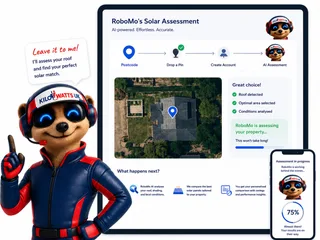
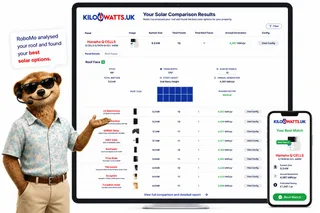
STEP 1
Choose Home, Business or Industrial
Enter your postcode to start your assessment.
STEP 2
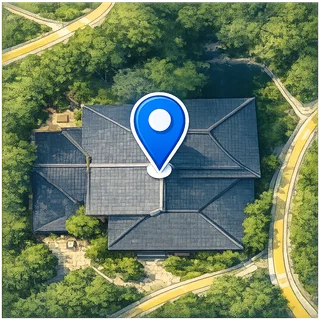
Drop a pin on your roof
STEP 3

Create your free account
STEP 4

Sit back and watch RoboMo™ work
RoboMo™ analyses your roof and builds your personalised solar comparison.
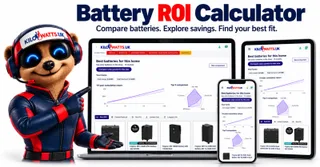
BATTERY ROI TOOL
See what a battery saves on your bill
Enter the day rate, off-peak rate and export rate. The calculator ranks batteries in the Kilowatts shop over 10 years.
Home batteries also suit offices and small commercial sites. Industrial batteries are listed on their own calculator.

Step 1
Enter your postcode
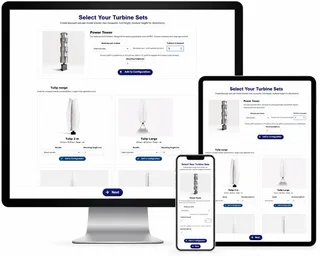
Start designing your wind energy system in seconds.
Are you an installer, distributor or renewable energy business?
Kilowatts UK is expanding the Flower Turbines partner network across the UK.
Become A Flower Turbines PartnerKilowatts UK is an authorised representative
Flower Turbines
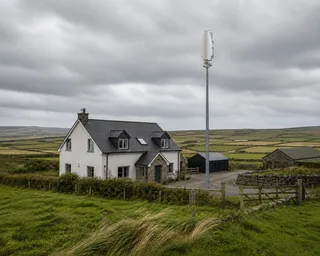
Compact vertical-axis turbines built for real UK sites, not just open farmland.
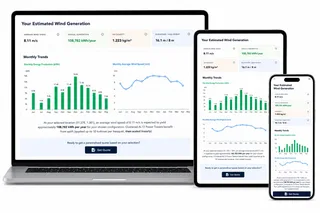
They start in light wind, sit in a small footprint, and are bird-safe by design. Cluster them as a bouquet and the group performs better together than the same turbines standing alone. Enter your postcode for a location-based generation estimate. Figures use area weather data and will differ if buildings, trees or hills sit in the way.
Starts in light UK wind
Built to generate in typical UK wind, not only open farmland.
Small rooftop or ground footprint
Compact towers for roofs, yards and tight sites.
Bird-safe slow rotation
Slow vertical-axis spin, bird-safe by design.
Bouquet clusters raise output
Grouped turbines outperform the same units standing alone.
STEP 2

Choose a location
STEP 3

Place your cluster
Tap the map where you want the turbine cluster to go.
STEP 4

Instant generation forecasts
Compare different turbine layouts and see annual generation forecasts instantly.
STEP 5

No commitment required
Explore different configurations before deciding whether to request a quotation.
Related articles

Mo's Mission Nominations
FAQ
Need Help? RoboMo's Got Answers
What does a Tigo optimiser do on a solar panel system?
A Tigo optimiser is a module-level device fitted behind a solar panel in a string inverter system. It helps manage mismatch, such as when one or two panels are shaded or performing differently from the rest. It cannot create extra sunlight, but it may reduce the knock-on effect of a weaker panel on the wider string.
Are Tigo optimisers worth it for UK homes?
They are most worth considering where a few panels are affected by chimneys, dormers, trees, aerials or neighbouring buildings for part of the day. They may add little value on a simple, unshaded roof with a well-designed string inverter system. The decision should be based on the roof layout, shade pattern and inverter design, not a generic claim.
Do I need a Tigo optimiser on every solar panel?
Not always. One attraction of Tigo is that it can be used selectively on the panels most likely to suffer mismatch. Your installer should explain which panels are being optimised and why, ideally using a roof plan or shade assessment.
Can Tigo optimisers be retrofitted to an existing solar PV system?
Retrofitting can be possible, but it needs checks before anyone starts work. The installer should confirm inverter compatibility, panel ratings, connectors, string design, roof access and safe isolation. If scaffolding or panel lifting is needed, the practical cost and disruption can be significant.
Will Tigo optimisers give me panel-level monitoring?
Only if the correct Tigo product and communication equipment are included. Some Tigo devices provide optimisation, some provide monitoring, and some are specified for safety-related functions. If monitoring is promised, ask whether the CCA and TAP or other required communication hardware is included in the quote.
How is Tigo different from SolarEdge or microinverters?
Tigo is usually used with a central string inverter, and optimisers may be fitted only to selected panels. SolarEdge-style optimiser systems are generally designed around optimiser hardware across the array, while microinverters convert DC to AC at each panel. The best option depends on the roof, shading, inverter design, access and maintenance considerations.
Do Tigo optimisers affect MCS, DNO or electrical paperwork?
The optimiser itself is only one part of the solar PV system, so the complete design still needs proper electrical checks, testing and documentation. If an existing MCS-certified system is altered, ask how the work will be recorded and whether any warranties or certificates are affected. DNO requirements usually relate to the inverter capacity, export arrangement and overall connection, so your installer should explain the position for the whole system.
How much extra generation will Tigo optimisers produce?
There is no reliable universal figure because the benefit depends on the site. On an unshaded array the gain may be negligible, while a roof with localised shading may see a more useful improvement. Ask for a site-specific assessment and compare the likely extra generation with the full installed cost, including access, labour, testing and any monitoring equipment.