


Hadean's Tubular Electrolyser Targets 30% Less Electricity for Green Hydrogen - Now It Faces a Steelworks Test
Published: 2026-11-24 04:49:34
Updated: 2026-11-23 20:50:26
See how Hadean’s tubular electrolyser pilot for steel annealing in Victoria will test a 30% electricity saving and what UK manufacturers should measure.
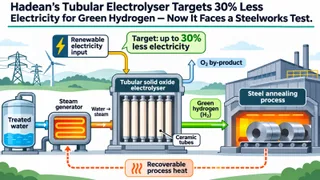
Hadean’s tubular solid oxide electrolyser faces a steelworks test
Hadean Energy estimates that its tubular solid oxide electrolyser could use around 30% less electricity than conventional electrolysers if it can use process heat. On 5 November 2026, the Australian Renewable Energy Agency (ARENA) announced AUD 15 million in funding for the AUD 30 million pilot in Victoria. Construction and operation were still subject to final deployment arrangements and approvals. The plant is expected to produce up to 7 kg of hydrogen per hour for steel annealing. The 30% saving is a target for the trial. ARENA funding announcement
For UK manufacturers, the measure to compare is electricity use per kilogram of hydrogen delivered at the required purity and pressure. The result depends on when suitable heat is available and how much electricity it takes to prepare, compress and deliver the gas.
What the Victoria pilot will supply
ARENA expects the pilot to supply around 85% of the hydrogen needed for one annealing process at a separate industrial site. Annealing uses controlled heating and cooling to change the properties of steel. To estimate the emissions impact, the project would need to identify which hydrogen supply it displaces and account for the energy used to produce and deliver the gas. ARENA funding announcement
The project profile gives a planned demonstration capacity of 200–300 kW, with design and procurement to precede construction, commissioning and operation. The power rating in kW and peak output in kg per hour may refer to different operating conditions. An efficiency test needs to measure electricity use in kWh and hydrogen output in kg over the same period and record heat input separately. ARENA project profile
How a tubular solid oxide electrolyser uses heat
A solid oxide electrolyser uses electricity and a ceramic electrolyte to split high-temperature steam into hydrogen and oxygen. Hadean’s cells are tubular. Recovered heat can supply some of the energy needed to produce steam and bring it to operating temperature, cutting the electricity needed for that step. The Victoria pilot will assess whether waste heat can be recovered for this purpose. Environment Agency guidance on water electrolysis · ARENA project profile
At the site survey, check how much heat is available at the proposed connection point, at what temperature and at what times. An exhaust stream may be hot enough during a furnace run and yield little useful heat during a changeover. If an electric boiler makes up the shortfall, include its consumption in the comparison. The feasibility study should show how often the boiler would run over a representative production schedule. The site’s energy monitoring controls can help track the boiler’s electricity use during those periods.
What would substantiate the 30% electricity saving?
ARENA’s project profile names alkaline and proton exchange membrane (PEM) electrolysers as the comparison technologies. A fair test needs a defined operating schedule and the same hydrogen specification and delivery point for each option. Report electricity and heat separately per kilogram delivered. ARENA project profile The US Department of Energy’s 2022 benchmark for high-temperature electrolysis drew on tests at Idaho National Laboratory from 2020 to 2022. The system used 38 kWh of electricity per kg of hydrogen and 47 kWh per kg when electricity and heat were counted together. The difference, 9 kWh per kg, was heat input under the benchmark’s accounting. The benchmark covers the electrolyser system. A steelworks comparison also needs to include any extra energy required to deliver hydrogen at the specified purity and pressure. US Department of Energy high-temperature electrolysis benchmark
Overview
The Australian demonstration has a budget of AUD 30 million. For a UK buying decision, compare the cost per kilogram delivered with the cost of the existing supply over a representative year. Include electricity, heat recovery equipment, maintenance, stack replacement and backup hydrogen. Use the site’s contracted rates and test how changes in UK electricity prices could affect the cost per kilogram. Fewer running hours or frequent backup deliveries can erode the savings from lower electricity use during steady operation. ARENA project profile
Where the technology could fit in UK industry
Start with the process that already uses hydrogen. Record hourly demand, peak flow, required purity and delivery pressure. Check how long production can tolerate a supply interruption. Steady demand can keep a high-temperature unit running regularly. If demand drops sharply between batches or over weekends, model the costs of hot standby, shutdown and restart, storage and backup deliveries. Environment Agency guidance on water electrolysis
Check whether the electricity supply can handle the plant’s maximum draw, including auxiliary equipment and any electric steam generation. If import capacity is tight, give the distribution network operator the expected load profile early. If the proposal includes on-site solar, use the hourly load profile to compare industrial solar installations. Match expected generation to the electrolyser’s operating hours and account for lower winter solar output when estimating grid imports. For UK emissions reporting, consult the UK Low Carbon Hydrogen Standard on how to account for electricity and other production inputs. UK Low Carbon Hydrogen Standard
UK permitting and hydrogen safety checks
Before fixing the layout, discuss planning with the local planning authority and check permit or authorisation requirements with the relevant environmental regulator. Contact the Environment Agency in England, Natural Resources Wales, the Scottish Environment Protection Agency or the Northern Ireland Environment Agency, depending on the site. Share the proposed production capacity, hydrogen inventory, water source and discharge arrangements so the regulator can advise on the proposal. UK regulator guidance on hydrogen production by electrolysis
For workplace fire and explosion risks in Great Britain, use the Health and Safety Executive’s guidance on the Dangerous Substances and Explosive Atmospheres Regulations (DSEAR). In Northern Ireland, use the Health and Safety Executive for Northern Ireland’s approved code of practice and guidance for the Northern Ireland regulations. Have the design team review foreseeable releases, ventilation, gas detection, ignition control and safe shutdown. If production and use are on different sites, agree who is responsible for each part of the supply chain and how the receiving plant will maintain supply during an outage. HSE guidance on explosive atmospheres · HSENI approved code of practice and guidance
Solar comparison
Compare solar for your property
Enter your postcode to assess your roof, compare solar options and get quotes from UK installers.
- Free postcode start
- Home, business and industrial
- RoboMo™ maps your roof
See which panels fit your roof
Choose home, business or industrial, then enter your postcode. RoboMo maps the roof and ranks panel brands by fit.
1. Postcode Start the assessment for your property.
2. Pin the roof Mark the array on the map.
3. Compare RoboMo™ builds your options.

Battery ROI tool
See what a battery saves on your bill
Enter the day rate, off-peak rate and export rate. The calculator ranks batteries in the Kilowatts shop over 10 years. Home batteries also suit offices and small commercial sites.
Reading
Sources and further reading
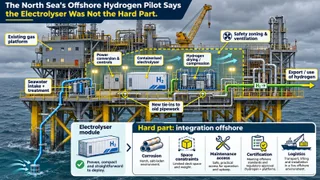
See what the North Sea’s PosHYdon offshore hydrogen pilot taught UK developers about integrating platform equipment, assigning control and exporting gas.
Read article
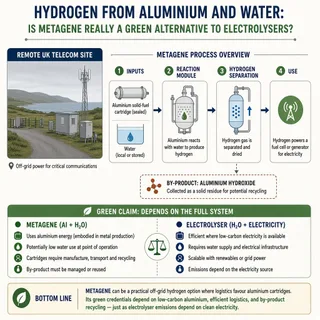
French defence funding does not make METAGENE a green UK alternative to electrolysers. Aluminium is a fuel until yield and recycling energy are published.
Read article
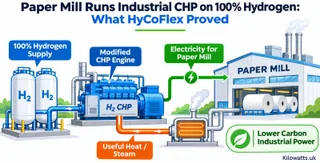
See how HyCoFlex generated power and process steam at full load on 100% renewable hydrogen, and what UK factories should check before a CHP retrofit.
Read article
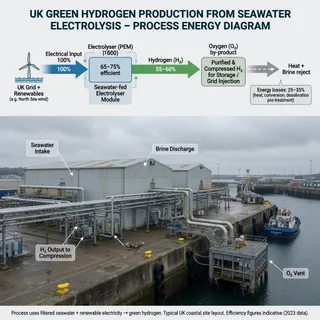
A seawater hydrogen system announced on 5 October 2026 does not push raw seawater through the cell. Waste heat pulls purified water out first.
Read article





Mo's Solar Mission
Mo's Mission Nominations
Garlinge Primary School and Nursery
Garlinge Primary School and Nursery is a foundation primary school on Westfield Road in Margate, Kent, for children aged 3 to 11. It is m...
St Luke's Church of England Primary SchoolSt Luke's Church of England Primary School is a voluntary controlled Church of England primary school on Jubilee Road in Formby, Merseysi...
Comberbach Nursery and Primary SchoolComberbach Nursery and Primary School is a primary academy on Mather Drive in the village of Comberbach, near Northwich in Cheshire, for...
Locations
Solar installation near you
Write for Kilowatts.uk
Got a trade and something worth saying?
Write it here under your own name. Sign in, put a profile up, and start a guide. Pay only if you want more links from your articles out to your own site.
Register
Create a Kilowatts.uk account, or sign in if you already have one.
Author profile
Put your name, photo and experience on a public author page.
Start creating
Write a guide or a blog. Free authors can put one followed link to their own site in articles each month.
FAQ
Need Help? RoboMo's Got Answers
Has Hadean’s electrolyser already shown a 30% electricity saving?
The figure is a target for the Australian pilot. The trial will assess whether recovered process heat can help the unit use around 30% less electricity than conventional electrolysers. The comparison needs to measure electricity and heat separately for each kilogram of hydrogen delivered to the same specification.
How does waste heat reduce the electricity needed to make hydrogen?
A solid oxide electrolyser uses electricity to split high-temperature steam into hydrogen and oxygen. Recovered heat can help produce and heat the steam, reducing the electricity needed for that step. If the heat supply drops and an electric boiler takes over, its electricity use needs to count towards the total.
What will the steelworks pilot use the hydrogen for?
The pilot is expected to produce up to 7 kg of hydrogen per hour for steel annealing at a separate industrial site. Annealing uses controlled heating and cooling to change the properties of steel. The pilot is expected to cover around 85% of the hydrogen demand for one annealing process.
Is this electrolyser suitable for a UK home with solar panels?
The pilot is designed for industrial use, with an existing hydrogen demand and a potential source of high-temperature waste heat. Its results will address steelworks operating conditions. The proposed electricity saving cannot be used to estimate the cost of making or storing hydrogen from household solar panels.
What performance figures should UK industrial buyers ask for?
Ask for metered electricity use in kWh per kilogram of hydrogen delivered at the purity and pressure your process needs. Include electricity for steam generation, drying, compression and standby, and ask for the heat requirement separately. Request figures for part-load operation, restarts and periods when recovered heat is unavailable.
Would lower electricity use make hydrogen cheaper or lower carbon?
Both outcomes depend on the site. For cost, compare the annual cost per kilogram delivered with your existing supply, including heat recovery equipment, maintenance, stack replacement and backup deliveries. For emissions, account for the electricity source, other production inputs and delivery, and compare the result with the supply the new plant would replace.
What should a UK site check before planning an installation?
Check whether the site can meet the plant’s peak electricity demand, including any electric boiler, and whether recovered heat is available when hydrogen is needed. Discuss the proposed layout with the local planning authority and check permitting with the relevant environmental regulator. Ask the design team to assess foreseeable hydrogen releases, ventilation, gas detection, ignition control and safe shutdown.
Live help
Need help right now?
Talk to RoboMo™ and get instant answers.