


How much does installing ev charging station cost in the UK?
Published: 2026-11-26 01:39:36
Updated: 2026-11-25 17:40:19
Practical UK guide on How much does installing ev charging station cost in the UK. Clear answers for homeowners comparing options and next steps.
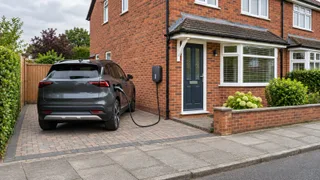
How much does it cost to install a home EV charger in the UK?
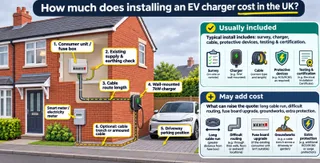
Budget around £1,000 to buy and install a home EV charger in the UK before any grant. Published supplier prices suggest a starting budget of roughly £950–£1,100 for a straightforward installation. Your quote depends on where you park, how far the fixed cable needs to run and whether your electrical supply needs extra work. Trenching across a driveway, mounting the charger on a post or upgrading an older consumer unit can push the price above that range.
Prices checked on 26 November 2026 show Ohme advertising the ePod from £949 and the Home Pro from £999, both with standard fitting. Hypervolt lists chargers from £690 and estimates £300–£400 for standard fitting, giving a total of £990–£1,090 for its lowest-priced charger. Use these figures as a starting point and ask for a written quote including VAT once the installer has assessed your property. Ohme fitted prices, Hypervolt installation pricing.
What does a standard EV charger installation include?
A fitted package generally covers the chargepoint, a set length of fixed cable, connection to a dedicated circuit, mounting and electrical testing. Allowances vary by supplier. Ask how much cable the quote includes, where it will run and whether the price covers any additional electrical protection identified during the survey. Confirm where the installer will drill and who will make good afterwards. For more on preparing your property, see the guide to fitting a charger at home.
Measure two routes. The fixed supply cable runs from the electrical supply to the chargepoint, including bends and changes in level. The charging lead runs from the chargepoint to the car’s socket when the car is parked as usual. When choosing a home charger, consider how you’ll use the lead. A tethered charger has a permanent lead. With an untethered charger, check whether a compatible lead is included. If you change cars or reverse into the bay, check that the lead will still reach without crossing a walkway.
What can push the fitted price above £1,100?
A longer cable run can increase the fitting price. Octopus Energy’s prices, checked on 26 November 2026, list the untethered Octopus Charge at £1,029 with standard installation and up to 10 metres of fixed cable. A run of up to 20 metres adds £125, bringing the illustrative pre-grant total to £1,154. A run of up to 30 metres adds £250 to the base price, bringing the total to £1,279. Ask for a quote including VAT that covers the actual route and any groundwork or remedial work. Octopus Charge price, Octopus installation tiers.
Overview
Ask the installer to mark the proposed route on a photo or sketch. If it crosses paving or a driveway, ask for separate prices for digging the trench and restoring the surface. If a builder will dig the trench, get the route and duct requirements from the installer before work starts.
The installer should check the consumer unit, earthing and available supply capacity. Tell them if you have an electric shower, heat pump or another charger that may run while the car is charging. Dynamic load management can reduce charging power when household demand rises. If you rely on a short off-peak window, ask how much energy the car is likely to receive during that time.
In Great Britain, the installer checks whether they can notify the local distribution network operator (DNO) after fitting or need to apply before work starts. A looped supply, where neighbouring homes share part of the incoming connection, can affect the timetable. Ask who handles the paperwork and whether any network work could delay fitting. Energy Networks Association connection process.
Can a grant reduce the cost of a home EV charger?
Eligible renters and people who own and live in a flat can receive 75% of eligible chargepoint purchase and installation costs, up to £500, if they have qualifying private off-street parking. If you have an allocated bay in a shared car park, check who can approve the cable route and how the electricity will be metered and billed. The Office for Zero Emission Vehicles lists the scheme as available until 31 March 2027. GOV.UK grant for renters and flat owners, OZEV chargepoint grant overview.
The separate on-street chargepoint grant also covers 75% of eligible chargepoint purchase and installation costs, up to £500. If the eligible cost is £600, the grant would be £450. The scheme requires a permanent cross-pavement solution and consent from the local highways authority. Ask for a separate price for the pavement work and check how often you can park within reach of the charger. Apply before installation and wait for confirmation of eligibility before having the chargepoint fitted. The scheme lists a closing date of 31 March 2027. GOV.UK on-street grant eligibility and application guidance.
How do workplace, fleet and public charging costs differ?
Workplace, fleet and public charging projects need a site-specific budget. At a small workplace, costs depend on how many vehicles charge at once, how long they stay and how far the bays are from the distribution board. For staff cars parked all day or vans parked overnight, give the designer typical arrival and departure times and the energy each vehicle needs. They can then assess whether several chargers can share the available power and give each vehicle enough charge before it leaves.
A public charging site or a fleet with short turnaround times may need higher-power equipment, more groundworks or a new or upgraded grid connection. Ask for separate prices for chargers, electrical work, groundworks and any connection costs. Allow for ongoing software, payment processing and maintenance fees where applicable. Eligible organisations can check the Workplace Charging Scheme before committing to the work. OZEV workplace and business grant overview.
How much will it cost to charge an EV at home?
Multiply the electricity drawn from the supply in kilowatt-hours (kWh) by the unit rate that applies during charging. A charger drawing 7 kilowatts (kW) for four hours uses 28 kWh. At an illustrative rate of 25p per kWh, the session costs £7.00. At 8p per kWh, it costs £2.24. The battery receives less than 28 kWh because some energy is lost during charging. Actual charging power depends on what the car can accept and what the installation can supply at the time.
When comparing EV tariffs, use your usual mileage and parking hours to work out how much charging you can fit into the cheaper window. Compare the daytime unit rate and standing charge too, as both affect your total household bill. If you already charge at home, use measured consumption from your charging sessions to check your estimate.
How to choose an EV charger installer and compare quotes
Give each installer the same photos of your meter, consumer unit, parking position and likely cable route. Show where the charging socket is on your car and mention any solar panels, home battery or heat pump. If you want to charge from surplus solar power, ask how the charger will work with your equipment, whether it can avoid drawing from the home battery and how solar charging works alongside off-peak scheduling.
Ask for a written total including VAT, with separate prices for the charger, any cable beyond the standard allowance, additional electrical work, trenching and reinstatement. When shortlisting a qualified electrician, confirm what testing the installer will carry out, what paperwork you’ll receive, who handles the DNO process and what the equipment and workmanship warranties cover. If you’re claiming a grant, check that the installer and charger are eligible before work begins. OZEV grant guidance for installers.
Use the Kilowatts.uk directory to shortlist local EV charger installers and compare their quotes for the same work. If you’re planning a charger alongside other home energy upgrades, you can also book a free energy survey.
Solar comparison
Compare solar for your property
Enter your postcode to assess your roof, compare solar options and get quotes from UK installers.
- Free postcode start
- Home, business and industrial
- RoboMo™ maps your roof
See which panels fit your roof
Choose home, business or industrial, then enter your postcode. RoboMo maps the roof and ranks panel brands by fit.
1. Postcode Start the assessment for your property.
2. Pin the roof Mark the array on the map.
3. Compare RoboMo™ builds your options.

Battery ROI tool
See what a battery saves on your bill
Enter the day rate, off-peak rate and export rate. The calculator ranks batteries in the Kilowatts shop over 10 years. Home batteries also suit offices and small commercial sites.
Reading
Sources and further reading
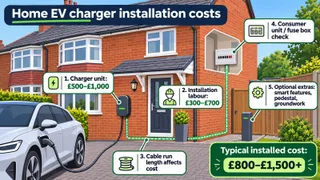
Budget £800 to £1,200 for a typical UK home car charging point before grants. See what fitting includes and how longer cable runs affect your quote.
Read article
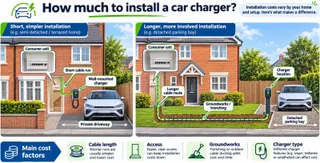
Ohme and Octopus Energy advertise home EV charger packages from around £950 to £1,130, including standard installation and before any grant.
Read article
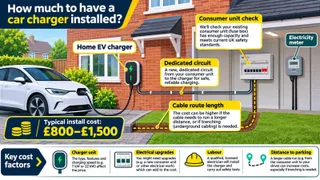
Practical UK guide on How much to have a car charger installed. Clear answers for homeowners comparing options and next steps.
Read article
Budget £800–£1,200 for a typical UK home EV charger installation. Compare VAT-inclusive quotes and see how cable routes and groundworks affect the price.
Read article




Mo's Solar Mission
Mo's Mission Nominations
Garlinge Primary School and Nursery
Garlinge Primary School and Nursery is a foundation primary school on Westfield Road in Margate, Kent, for children aged 3 to 11. It is m...
St Luke's Church of England Primary SchoolSt Luke's Church of England Primary School is a voluntary controlled Church of England primary school on Jubilee Road in Formby, Merseysi...
Comberbach Nursery and Primary SchoolComberbach Nursery and Primary School is a primary academy on Mather Drive in the village of Comberbach, near Northwich in Cheshire, for...
Locations
Solar installation near you
Write for Kilowatts.uk
Got a trade and something worth saying?
Write it here under your own name. Sign in, put a profile up, and start a guide. Pay only if you want more links from your articles out to your own site.
Register
Create a Kilowatts.uk account, or sign in if you already have one.
Author profile
Put your name, photo and experience on a public author page.
Start creating
Write a guide or a blog. Free authors can put one followed link to their own site in articles each month.
FAQ
Need Help? RoboMo's Got Answers
How much should I budget for a home EV charger in the UK?
Allow around £1,000 before any grant for the charger and a straightforward installation. The supplier examples in this article put a typical starting budget at roughly £950–£1,100. Ask for a written quote including VAT based on your parking position, cable route and electrical supply.
What is included in a standard EV charger installation?
A fitted package usually includes the charger, a fixed cable allowance, mounting, connection to a dedicated circuit and electrical testing. Ask how many metres of fixed cable are included and what the installer charges for a longer run. If you choose an untethered charger, check whether the separate lead that plugs into your car is included.
What can make my EV charger installation more expensive?
Long cable runs, a mounting post, trenching and repairs to paving can all increase the price. Your installer may also identify extra work at the consumer unit or recommend load management if your supply has limited spare capacity. Ask for an itemised quote so you can see which costs depend on the survey.
Can I get a grant if I rent or own a flat?
A chargepoint grant may be available if you rent your home or own and live in a flat and have qualifying private off-street parking. Check the current GOV.UK eligibility criteria and confirm that your charger and installer qualify before work begins. If your bay is in a shared car park, find out who can approve the cable route and how the electricity will be metered and billed.
Can I install a home EV charger if I park on the street?
It may be possible if your local highways authority approves a permanent way to run the charging cable across the pavement. Check whether you qualify for the on-street chargepoint grant before installation. Get a separate quote for the pavement work and consider how often you can park within reach of the charger.
Could my electricity supply delay the installation?
In Great Britain, the installer checks whether the local distribution network operator needs to approve the connection before fitting or can be notified afterwards. A looped supply, where neighbouring homes share part of the incoming connection, can affect the timetable. Ask the installer who will handle the paperwork and whether any network work is needed.
How much does it cost to charge an EV at home?
Multiply the electricity drawn from your supply in kWh by the unit rate that applies while you charge. A session using 28 kWh would cost £7 at 25p per kWh or £2.24 at 8p per kWh, using illustrative rates. When comparing tariffs, check how much charging fits into the cheaper window and factor in the daytime rate and standing charge.
How do I compare quotes from EV charger installers?
Give each installer the same photos of your meter, consumer unit, parking space and proposed cable route. Compare written totals including VAT, with separate prices for extra cabling, electrical work and any digging or surface repairs. Check what testing and paperwork are included and what the equipment and workmanship warranties cover.
Live help
Need help right now?
Talk to RoboMo™ and get instant answers.