


UK Startup Alta Vision Targets DNOs With Pole-Mounted 85 kWh Batteries
Published: 2026-11-25 15:17:37
Updated: 2026-11-25 07:18:37
See how Alta Vision’s 40 kW, 85 kWh pole-mounted battery could absorb surplus rooftop solar and ease evening peaks, and what UK grid operators would test.
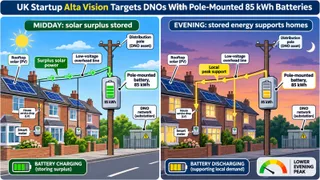
Alta Vision targets local grid operators with an 85 kWh pole-mounted battery
UK start-up Alta Vision has described a 40 kW, 85 kWh pole-mounted battery designed to absorb surplus rooftop solar at midday, help balance electrical phases and discharge during the evening peak. It is aimed at distribution network operators (DNOs), which run the local electricity networks serving homes and businesses. How much it can help depends on where it connects, how it controls power on each phase and how long it can sustain its output.
The ratings and intended uses come from Alta Vision’s own account in a November 2026 cohort announcement published by Innovate UK Business Connect. The profile gives no UK trial site, named network partner or commercial availability date. A public product datasheet, independent DNO assessment and measured results for this unit could not be verified. Innovate UK Business Connect cohort announcement
What do 40 kW and 85 kWh mean in practice?
The 40 kW rating describes power, or how quickly the system can transfer electricity. The 85 kWh rating describes how much energy it can store. If all 85 kWh were usable and the battery could deliver 40 kW continuously, it would run for about two hours and eight minutes before accounting for losses between the battery and the network. The same distinction between power and energy matters when you size a home battery.
A DNO would check whether 85 kWh is nominal or usable capacity, whether the unit can sustain 40 kW at the connection point, and how temperature and reserve settings affect both figures. It would then compare the battery’s expected output with demand on the feeder. A brief spike and a sustained evening peak can reach the same maximum demand while requiring very different amounts of energy.
How could the battery help a local electricity network?
A feeder is a circuit that supplies a group of properties. On a sunny day, a battery charging at a suitable point on the feeder can absorb some rooftop solar exports and reduce voltage rise on the affected stretch. During the evening peak, discharging close to the properties drawing power can ease the load on upstream cables or transformers. The best connection point depends on which problem the DNO needs to solve. Applied Energy study on the siting of low-voltage network batteries
Many homes take a single-phase supply from a three-phase feeder, so solar exports and evening demand can be unevenly spread across the phases. A DNO would check how much power the Alta Vision unit can draw or supply independently on each phase, then measure whether it brings voltage and current within the required limits. A separate National Grid Electricity Distribution project with UK Power Networks assesses phase switching by comparing customers’ smart meter voltages with the equipment operating and idle. A similar comparison could help measure the battery’s effect on a trial feeder. Energy Networks Association Phase Switch System project
What would a DNO check before installing one?
The DNO would first identify where and when voltage or loading exceeds operating limits. It would use readings from each phase to assess the effect of charging and discharging at possible connection points. A pole with good lifting access may be too far from the properties experiencing voltage rise. One in the right electrical location may have limited space or need structural work.
Alta Vision says the battery mounts on existing utility infrastructure without extra land, foundations or civil works. A site survey would still need to check the pole’s condition, the load from the enclosure and brackets, wind loading and clearance from overhead conductors. The operator would also need space to lift the unit into place and replace it, and a safe way to isolate it for maintenance. Alta Vision’s cohort profile
The Energy Networks Association’s *Distributed Generation Guide* explains that a DNO assesses storage as demand when it charges from the network and as generation when it exports. The operator would confirm which connection requirements apply, including Engineering Recommendation G99 where applicable. It would also assess how voltage changes as the battery switches between charging and discharging. The site design would show how the unit is earthed, how interface protection disconnects it when required and where crews can safely isolate it. Energy Networks Association Distributed Generation Guide
Who controls the battery, and could it provide backup?
Alta Vision describes direct utility dispatch, meaning the network operator would decide when the battery charges or discharges. In a trial, the operator would check how much energy is available when it sends a command, which readings and alarms it can see remotely and how the battery responds if communications fail. The battery needs spare capacity to absorb midday solar and enough stored energy to discharge during the evening peak.
The published profile leaves outage operation unspecified. To provide backup to part of a public network, the system would need to isolate that section from the wider grid, supply it with suitable protection and controls, and reconnect it safely when the supply returns. Alta Vision’s cohort profile At property level, homeowners can check what equipment a home battery needs for backup.
When could pole-mounted storage be worth the cost?
Pole-mounted storage is worth assessing when a constraint is brief and recurring, the battery can recharge between events and a suitable pole is close to the affected part of the feeder. Alta Vision’s public profile gives no installed price, warranty, service life or round-trip efficiency. Round-trip efficiency tells the DNO how much of the electricity used to charge the battery it can deliver back to the network. A cost comparison would also include mounting work, lifting, electrical connection, communications, servicing and eventual replacement. Alta Vision’s cohort profile
Overview
A field trial would record voltage and current on each phase before and during operation, along with the battery’s power, state of charge and availability. Those records would help the DNO judge how often the battery relieved the constraint and whether it was available when the feeder needed support.
What does it mean for homes and businesses?
Alta Vision’s proposed battery would serve the shared local network. Any relief it provides would benefit the circuit it serves. The effect on an individual bill would depend on the customer’s tariff or participation in a specific scheme.
If you are considering storage for your property, match it to the job you want it to do. To use more rooftop or balcony solar after sunset, compare when you generate electricity with when you use it. If you already have panels, check what is involved in adding storage to existing solar.
To reduce demand peaks at a business, use half-hourly meter data where available to see how high the peaks are and how long they last. That profile can help you assess battery storage for your site. For backup, identify which circuits you need to keep running and for how long before comparing systems. If you are also planning a new rooftop array for your business, you can compare solar installation options.
Solar comparison
Compare solar for your property
Enter your postcode to assess your roof, compare solar options and get quotes from UK installers.
- Free postcode start
- Home, business and industrial
- RoboMo™ maps your roof
See which panels fit your roof
Choose home, business or industrial, then enter your postcode. RoboMo maps the roof and ranks panel brands by fit.
1. Postcode Start the assessment for your property.
2. Pin the roof Mark the array on the map.
3. Compare RoboMo™ builds your options.

Battery ROI tool
See what a battery saves on your bill
Enter the day rate, off-peak rate and export rate. The calculator ranks batteries in the Kilowatts shop over 10 years. Home batteries also suit offices and small commercial sites.
Reading
Sources and further reading
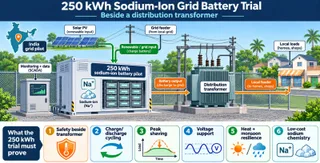
Jaipur's 250 kWh sodium-ion battery trial will test whether storage can ease peak transformer loads. See what UK battery buyers can learn about sizing.
Read article
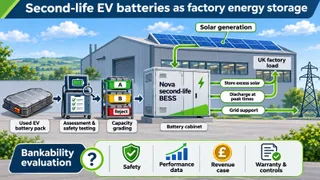
Assess Moment Energy’s 500 kWh Nova second-life EV battery for UK commercial sites. See how usable capacity, warranties and grid limits affect finance.
Read article
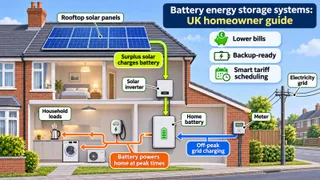
Compare battery energy storage systems for UK homes. Use your electricity readings and tariff to size a battery, estimate savings and check backup options.
Read article
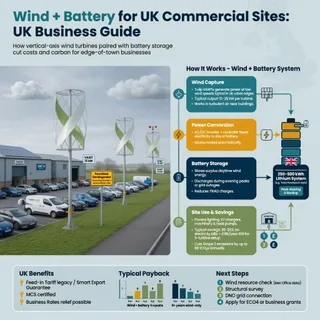
Wind plus battery is credible for a UK commercial site only with usable rotor-height wind, planning and a connection. Storage cannot make wind firm power.
Read article


Mo's Solar Mission
Mo's Mission Nominations
Garlinge Primary School and Nursery
Garlinge Primary School and Nursery is a foundation primary school on Westfield Road in Margate, Kent, for children aged 3 to 11. It is m...
St Luke's Church of England Primary SchoolSt Luke's Church of England Primary School is a voluntary controlled Church of England primary school on Jubilee Road in Formby, Merseysi...
Comberbach Nursery and Primary SchoolComberbach Nursery and Primary School is a primary academy on Mather Drive in the village of Comberbach, near Northwich in Cheshire, for...
Locations
Solar installation near you
Write for Kilowatts.uk
Got a trade and something worth saying?
Write it here under your own name. Sign in, put a profile up, and start a guide. Pay only if you want more links from your articles out to your own site.
Register
Create a Kilowatts.uk account, or sign in if you already have one.
Author profile
Put your name, photo and experience on a public author page.
Start creating
Write a guide or a blog. Free authors can put one followed link to their own site in articles each month.
FAQ
Need Help? RoboMo's Got Answers
Can homeowners buy Alta Vision’s pole-mounted battery?
Alta Vision designed the unit for distribution network operators (DNOs), which run the local electricity networks serving homes and businesses. The published profile gives no commercial availability date, installed price or named UK trial site.
How long could the 85 kWh battery deliver 40 kW?
It could deliver 40 kW for about two hours and eight minutes if all 85 kWh were usable and the unit could sustain that output. Actual delivery would depend on usable capacity, reserve settings and losses between the battery and the network.
Could a pole-mounted battery help my street export more rooftop solar?
Charging from local solar exports could reduce voltage rise on part of the local circuit and create room for more exports. The effect would depend on where the battery connects, how much spare capacity it has at midday and how it charges on each electrical phase. Your DNO would need to assess any change to your property’s export limit.
Can the battery go on any existing electricity pole?
The pole needs to be close enough to the part of the network experiencing the problem. The DNO would also check the pole’s condition, whether it can carry the extra load, clearances from overhead lines and access for installation and maintenance.
Would the battery keep my home powered during a power cut?
Alta Vision’s published profile leaves backup capability unspecified. To keep homes supplied during an outage, the system would need to safely isolate the affected section of the network, power it and reconnect it when the wider supply returns.
Could a shared battery lower my electricity bill?
The battery is intended to ease pressure on the shared local network. Any direct saving on your bill would depend on your tariff or participation in a specific scheme.
Can I use a pole-mounted battery to store my own solar power for later?
Alta Vision’s design lets the network operator decide when the battery charges and discharges. If your aim is to use more of your own solar power after sunset, compare home batteries using your daytime solar surplus and your typical evening electricity use.
Live help
Need help right now?
Talk to RoboMo™ and get instant answers.