


Which Octopus Tariff Can I Use to Charge a Battery Cheap at Night?
Published: 2026-11-28 20:11:40
Updated: 2026-11-28 12:14:31
Which Octopus tariff can charge a home battery cheap at night? Compare Go, Intelligent Go, Flux, Cosy, Economy 7 and Agile, with rates and who qualifies.
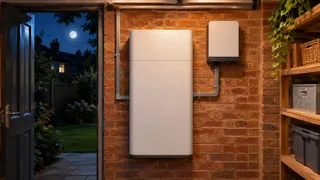
Short answer: Octopus has no tariff built only for home batteries, so the cheapest night rate you can use depends on what else you own. With an electric car, Intelligent Octopus Go (23:30 to 05:30) or Octopus Go (00:30 to 05:30) have some of the lowest night rates, 9.9p and 9.4p per kWh in every region on 28 November 2026. With solar and a battery, Octopus Flux gives a three-hour window from 02:00 to 05:00 at 15.4p to 16.9p, depending on region. With a heat pump or electric heating, Cosy Octopus has three cheap windows a day. With a battery and none of those, the realistic options are a two-rate Economy 7 version of Flexible Octopus (night rate 13.7p to 15.0p) or Agile Octopus, whose overnight prices change every half hour. Rates vary by region and change over time, so check Octopus for the current price before you switch.
Octopus night tariffs for batteries at a glance
Octopus ties its cheapest night rates to equipment: an electric vehicle, solar panels with a battery, or a heat pump. A battery on its own does not qualify you for the tariffs with the lowest overnight price. This table shows what each tariff needs and what it charged in London on 28 November 2026, in pence per kWh including VAT, rounded to one decimal place.
| Tariff | Who can join | Cheap window | Cheap rate | Day rate |
|---|---|---|---|---|
| Intelligent Octopus Go | Electric car or plug-in hybrid charged at home | 23:30 to 05:30 | 9.9p | 34.2p |
| Intelligent Octopus Go Max | Same as above | 23:30 to 05:30 | 6.5p | 38.3p |
| Octopus Go | Electric car or plug-in hybrid charged at home | 00:30 to 05:30 | 9.4p | 34.5p |
| Octopus Flux import | Solar panels and a home battery | 02:00 to 05:00 | 16.2p | 26.8p (37.4p from 16:00 to 19:00) |
| Cosy Octopus | Heat pump, electric boiler or electric radiators | 04:00 to 07:00, 13:00 to 16:00, 22:00 to 00:00 | 14.1p | 28.8p (43.2p from 16:00 to 19:00) |
| Flexible Octopus on Economy 7 | Any home with a two-rate meter | Set by your meter | 14.0p | 33.1p |
| Agile Octopus | Any home with a smart meter | Changes every half hour | Varies | Varies |
Regions differ. The Go and Intelligent Go night rates are the same everywhere, but day rates are not: Intelligent Octopus Go runs from 32.5p to 36.3p. Our home energy tariff comparison shows the dated Octopus rates for your region.
Why the gap matters more than the night rate
A battery moves electricity from a cheap hour to an expensive one. What you save per kWh is the day rate minus the night rate you paid, allowing for energy lost in the battery. So the useful number is the gap, and a wide gap only pays if you use enough in the expensive hours to empty the battery most days.
An illustration, using our own assumptions: the battery supplies 8 kWh a day during day-rate hours and returns about nine-tenths of what goes in. Check your battery's data sheet and your own bills.
- Octopus Go, London: a stored kWh costs about 10.4p to charge after losses, against a 34.5p day rate. That saves about 24p per kWh, roughly 700 pounds a year.
- Flexible Octopus on Economy 7, London: a stored kWh costs about 15.5p to charge, against a 33.1p day rate. That saves about 17.6p per kWh, roughly 510 pounds a year.
These are illustrations, not forecasts. They ignore standing charges and assume you really use 8 kWh a day in the expensive hours. To test your own numbers, use our battery ROI calculator, which takes your day rate, off-peak rate and any export rate.
Option 1: You have an electric car
Octopus's EV tariffs have some of the lowest night rates in our data, and the cheap rate covers the whole house, so a battery can fill in the same window.
- Intelligent Octopus Go: six cheap hours, 23:30 to 05:30, at 9.9p. Octopus schedules your car's charging in its app.
- Intelligent Octopus Go Max: the same hours at 6.5p, with a higher day rate, so it suits homes that use most of their electricity overnight.
- Octopus Go: five cheap hours, 00:30 to 05:30, at 9.4p. Octopus does not control your charging, so you set the schedule yourself.
The catch is eligibility. Octopus's terms describe these tariffs as being for customers with a battery electric or plug-in hybrid vehicle. A home battery alone does not qualify, and Octopus can move you to another tariff if you do not meet the criteria.
Octopus also offers Charge Pack, an add-on that runs a supported battery for you and guarantees at least 12 pounds a month for taking part in grid sessions. It works on Intelligent Octopus Go, Octopus Go, Flexible or Fixed tariffs, with Outgoing Octopus for export. Octopus lists AlphaESS, EcoFlow, Enphase, FoxESS, GivEnergy, HanchuESS, Huawei, Sigenergy and SolarEdge as supported, with Tesla, Solax, LuxPower, Solis, Goodwe, Duracell and Hinen coming soon.
Option 2: You have solar panels and a battery
Octopus Flux is the tariff Octopus points solar and battery owners to. Its cheap window is 02:00 to 05:00, only three hours, at 16.2p in London (15.4p to 16.9p across regions). The 16:00 to 19:00 peak costs 37.4p to import and pays 30.3p to export, which suits discharging the battery.
You need a smart meter, a working solar system and battery, and an export meter, and Octopus may ask for your MCS certificate and G98 or G99 paperwork. Flux combines import and export, so you take both from Octopus. On standard Flux you set your own schedule, generally charging from 02:00 to 05:00 and discharging from 16:00 to 19:00.
Intelligent Octopus Flux, where Octopus controls a compatible battery, is listed as temporarily unavailable and limited to customers who bought their solar and battery from Octopus. Check the Octopus page before planning around it. Our guide to the best Octopus tariff for solar panels covers the export side.
With only three hours, check your inverter's charge rate. A 3.6kW inverter can move at most about 10.8 kWh in three hours, before losses.
Option 3: You have a heat pump or electric heating
Cosy Octopus has three cheap windows a day: 04:00 to 07:00, 13:00 to 16:00 and 22:00 to 00:00. In London the cheap rate was 14.1p and the 16:00 to 19:00 peak was 43.2p. Octopus says you can join with an air or ground source heat pump, an electric boiler or electric radiators. A battery can then fill at 22:00 or from 04:00 and cover the evening peak.
Option 4: You only have a battery
With no electric car, solar panels or heat pump, you are outside the rules for the cheapest night tariffs. You still have three routes.
Economy 7 on Flexible Octopus. A two-rate meter gives a cheap night rate and a dearer day rate: 14.0p and 33.1p in London on 28 November 2026 (night rates ran from 13.7p to 15.0p across regions). The window is set by your meter, usually seven hours. Ask Octopus whether your meter can run two rates.
Agile Octopus. Open to any home with a suitable smart meter, with prices published each afternoon for the next day and capped at 100p. It can be very cheap when wind is strong, but it is not reliably cheap overnight. In our dated London snapshots from 4 to 28 November 2026, the 02:00 to 05:00 average ranged from 27.7p to 35.2p, and the cheapest half hour of each day never fell below about 25p. That is well above the Economy 7 night rate, so Agile suits batteries with software that chases prices, not a fixed schedule.
Flexible Octopus with Charge Pack. If your battery brand is supported, Charge Pack adds guaranteed monthly credits. On a standard variable tariff Octopus says the battery stays in self-consumption mode outside sessions, so do not expect cheap overnight arbitrage. Octopus also requires Outgoing Octopus for export, so check that a battery-only home qualifies.
Our guide to whether a home battery is worth it without solar explains why these set-ups usually earn modest returns, and charging a battery from the grid off-peak shows a typical day.
Will my battery work with these tariffs?
On Octopus Go, Flux and Economy 7 you set the charging times yourself, so any battery and inverter that can run a timed grid-charge window can follow the tariff. Tariffs where Octopus controls the battery, such as Intelligent Octopus Flux and Charge Pack, only work with the brands on Octopus's lists, and Octopus cannot guarantee every model.
If you are buying equipment, ask your installer to confirm the grid-charge schedule and charge rate for your tariff before you order. Our inverter and battery bundles pair a LuxpowerTek hybrid inverter with a Fogstar battery, for example the GEN2-LB-EU 10K with a 10kWh Fogstar battery. Installation is not included. For sizing, read what size battery you need.
Before you switch
- Check you have a smart meter Octopus can read half-hourly. Octopus says connecting generally takes around 14 days.
- Read the eligibility rules on the tariff page, not only the headline rate.
- Octopus's terms say that once you join a smart tariff you cannot move to a different smart tariff for 30 days.
- Compare standing charges as well as unit rates, using our guide to comparing electricity tariffs.
VAT on domestic electricity in Great Britain is currently charged at the zero rate, from 1 October 2026 to 30 June 2027, so the VAT-inclusive prices above equal the prices before VAT. Check what applies when you switch.
Get a battery quote
The system builder lets you choose a battery and inverter, add your electricity use and tariff, and save a quote. To compare panels, batteries and installers for your roof, start with our home solar comparison. Adding a battery to existing panels? See can I add a battery to an existing solar system.
Rates change. Prices here are a dated snapshot from 28 November 2026 and vary by region. Tariff rules, availability and eligibility also change, so check Octopus Energy for the current price and terms before you switch. This article is general information, not financial advice.
Sources
- Octopus Energy: Octopus Go, Intelligent Octopus Go, Octopus Flux, Intelligent Octopus Flux, Cosy Octopus, Agile Octopus, Charge Pack and smart tariff terms, read 28 November 2026.
- Octopus Energy public tariff API, collected by Kilowatts UK on 28 November 2026 (London unless stated, direct debit, including VAT).
Solar comparison
Compare solar for your property
Enter your postcode to assess your roof, compare solar options and get quotes from UK installers.
- Free postcode start
- Home, business and industrial
- RoboMo™ maps your roof
See which panels fit your roof
Choose home, business or industrial, then enter your postcode. RoboMo maps the roof and ranks panel brands by fit.
1. Postcode Start the assessment for your property.
2. Pin the roof Mark the array on the map.
3. Compare RoboMo™ builds your options.

Battery ROI tool
See what a battery saves on your bill
Enter the day rate, off-peak rate and export rate. The calculator ranks batteries in the Kilowatts shop over 10 years. Home batteries also suit offices and small commercial sites.
Reading
Sources and further reading
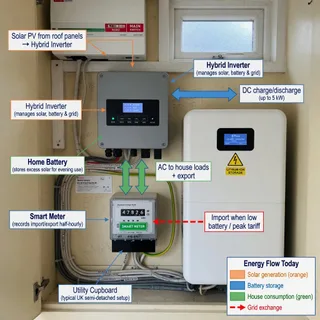
Octopus Flux and Intelligent Octopus Flux are domestic battery storage tariffs that price import and export by time of day, not a free battery.
Read article
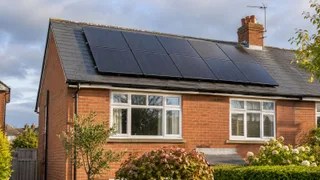
Which Octopus tariff suits solar panels? Compare Flux, Outgoing, Prime Outgoing, Intelligent Go and Agile on import and export, with rates and eligibility.
Read article
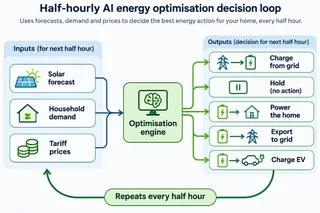
Discover how SolarMind uses AI to optimise solar panels, home batteries and EV charging, and whether it could help reduce your energy bills.
Read article
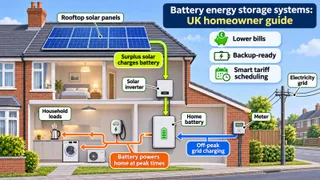
Compare battery energy storage systems for UK homes. Use your electricity readings and tariff to size a battery, estimate savings and check backup options.
Read article

Mo's Solar Mission
Mo's Mission Nominations
Garlinge Primary School and Nursery
Garlinge Primary School and Nursery is a foundation primary school on Westfield Road in Margate, Kent, for children aged 3 to 11. It is m...
St Luke's Church of England Primary SchoolSt Luke's Church of England Primary School is a voluntary controlled Church of England primary school on Jubilee Road in Formby, Merseysi...
Comberbach Nursery and Primary SchoolComberbach Nursery and Primary School is a primary academy on Mather Drive in the village of Comberbach, near Northwich in Cheshire, for...
Locations
Solar installation near you
Write for Kilowatts.uk
Got a trade and something worth saying?
Write it here under your own name. Sign in, put a profile up, and start a guide. Pay only if you want more links from your articles out to your own site.
Register
Create a Kilowatts.uk account, or sign in if you already have one.
Author profile
Put your name, photo and experience on a public author page.
Start creating
Write a guide or a blog. Free authors can put one followed link to their own site in articles each month.
FAQ
Need Help? RoboMo's Got Answers
Can I use Octopus Go to charge a home battery without an electric car?
No. Octopus's Go page and terms say the tariff is for customers who charge an electric car or plug-in hybrid at home. A battery alone does not qualify, and Octopus may move you to another tariff.
Which Octopus tariff is cheapest for charging a battery overnight?
On 28 November 2026 the lowest overnight rates among the tariffs above were on the EV tariffs: 6.5p on Intelligent Octopus Go Max, 9.4p on Octopus Go and 9.9p on Intelligent Octopus Go, all needing an electric car. For solar and battery homes it is Octopus Flux at 16.2p in London. With neither, Economy 7 at about 14.0p in London is the lowest fixed night rate in our data.
Is Agile Octopus good for charging a battery at night?
Not reliably. In our dated London snapshots through November 2026, the 02:00 to 05:00 average was between about 28p and 35p, higher than the Flux and Economy 7 night rates. It can work with software that picks the cheapest half hours automatically.
What is the difference between Octopus Flux and Intelligent Octopus Flux?
On standard Flux you set your own battery schedule. On Intelligent Octopus Flux, Octopus controls a compatible battery. Octopus lists the intelligent version as temporarily unavailable and limited to customers who bought solar and a battery from Octopus, while standard Flux is available.
How many cheap hours do I get?
Five on Octopus Go, six on Intelligent Octopus Go, three on Flux, eight a day in three windows on Cosy, and a window set by your meter on Economy 7. A battery only helps if it can fill in that time.
Live help
Need help right now?
Talk to RoboMo™ and get instant answers.