


Domestic wind turbine and battery storage uk?
Published: 2026-11-24 14:29:42
Updated: 2026-11-24 06:31:02
See if a domestic wind turbine and battery storage suit your UK home. Check your site’s wind yield, size a battery and weigh savings against export income.
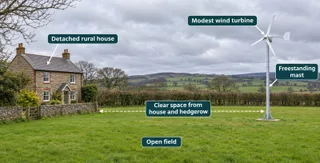
Domestic wind turbines and battery storage in the UK
A domestic wind turbine can charge a home battery if the turbine, controller and battery system are compatible. The combination makes most sense on an exposed site where the turbine regularly generates more electricity than the home uses and the household draws power from the grid later. A sheltered site may generate too little to justify a turbine. If you already use most of your wind generation as it arrives, a battery may add little value.
Assess the wind resource before choosing a battery. If you already have a turbine, start with metered generation, import and export data. For a new wind installation, ask for a site-specific yield forecast that shows when you’re likely to have surplus electricity.
Is your property windy enough for a domestic turbine?
An exposed site with room for a freestanding mast is generally a better candidate than a sheltered garden or a roof surrounded by buildings. Nearby trees, rooflines and terrain can slow the wind and create turbulence. A roof-mounted turbine also needs a structural assessment that considers vibration and how noise could travel through the building.
Use regional wind data for an initial check, then ask what wind conditions the installer expects at the proposed hub height, the height of the rotor’s centre. Ask which wind data and turbine power curve the forecast uses and how it accounts for nearby obstructions, electrical losses and downtime. If those assumptions could change your decision, ask whether measuring wind on site would improve the estimate. Check where the mast and foundations could go, how the cable would reach the house and how the installer would get to the turbine for servicing.
Rated power in kilowatts (kW) describes the turbine’s output at a specified wind speed. Annual generation in kilowatt hours (kWh) depends on the range of wind speeds at the site. Two homes with the same turbine can have very different annual yields and different amounts of surplus to store.
How do you connect wind to a home battery?
An existing grid-connected turbine can sometimes work with an AC-coupled battery. The turbine keeps its own controller and inverter. The battery system uses a meter or sensor at the grid connection to detect surplus power. If you already have solar or a battery, give the installer the exact inverter and battery models, the metering layout and any existing export limit. Ask how the battery will detect surplus from the wind inverter and how the combined system will stay within the limit.
A system that charges a battery directly needs a wind controller matched to the turbine and the battery’s charging requirements. If a solar hybrid inverter has a spare input, check the manufacturer’s documentation for explicit support for the proposed wind equipment. Ask what controls the turbine when the battery is full, the grid goes down or the system reaches its export limit. Depending on the design, the controller may slow or stop the turbine or send surplus power to a diversion load. The quote should say who handles faults involving equipment from more than one manufacturer.
What battery size makes sense for domestic wind?
Size the battery around the surplus you regularly generate and the electricity you can use later. Usable capacity in kWh tells you how much energy the battery can store within its operating limits. Charge power in kW tells you how quickly it can absorb surplus. Discharge power tells you how much household demand it can cover at once. Even with room left in the battery, some generation can still go to the grid if the surplus exceeds the battery’s maximum charge power.
Ask the installer to compare half-hourly household demand with metered wind generation or a site-specific generation profile. Include existing solar and plans for a heat pump or electric car if they could change when you use electricity. Ask how much surplus the battery would capture, how much would still go to the grid or be curtailed, and how much stored energy would replace grid imports.
Will adding a battery save enough to justify the cost?
Compare wind alone with wind plus storage using the same generation forecast, household demand and tariffs. To work out what the battery adds, subtract the export income you give up from the import charges you avoid. Round-trip efficiency accounts for energy lost between charging and discharging. Ask where the quoted efficiency is measured so you can account for any inverter losses outside that figure. Suppose you send 100 kWh of wind surplus that you could otherwise export to a battery with 85% round-trip efficiency. If all 85 kWh returned to the home replace imports at an assumed 25p per kWh, you avoid £21.25 in import charges. Exporting the original 100 kWh at an assumed 10p per kWh would earn £10. The extra bill saving is £11.25 before battery costs. The saving falls if some stored electricity fails to replace imports or if your export rate is higher. Get an itemised quote for the turbine, mast, foundations, lifting access, trenching, electrical work and grid paperwork. Ask for separate prices for storage and backup hardware. Include turbine servicing and access costs when assessing the whole project, and check what the estimate assumes about battery replacement when assessing the value of storage.
What planning and grid checks apply in the UK?
Check planning and grid connection separately before ordering equipment. Give the planning authority the proposed location, mounting type and overall height. In England, the relevant permitted development provisions are in Schedule 2, Part 14, Class H of the General Permitted Development Order. Check the conditions for your installation with the local planning authority before relying on those rights.
In Scotland, the planning authority must determine whether a qualifying freestanding proposal needs prior approval. Wales has a conditional permitted development route for freestanding turbines and requires a planning application for a building-mounted turbine. In Northern Ireland, check your proposal with the district council’s planning office.
In Great Britain, ask the installer to confirm the connection route with your distribution network operator (DNO) for the combined system, including any existing solar or storage. G98 has a threshold of 16 A per phase and other eligibility conditions. A combined system can need a G99 application before connection, even with a proposed export limit. In Northern Ireland, ask the installer to confirm the applicable NIE Networks route and commissioning paperwork.
Can you get paid for exporting wind power alongside a battery?
Eligible domestic wind installations in Great Britain can receive Smart Export Guarantee (SEG) payments. Before buying, ask the installer to confirm that the installation will have Microgeneration Certification Scheme (MCS) certification or equivalent certification accepted by the SEG supplier. Check that your meter can record exports half-hourly and ask how to arrange an export Meter Point Administration Number (MPAN) if you need one. If the battery can charge from the grid, show the supplier the proposed metering layout and ask what evidence it will accept to identify eligible renewable exports. Get that answer before the installer finalises the design.
In Northern Ireland, export payments depend on the supplier’s purchase terms. Check eligibility, what meter readings the supplier needs and how it treats exports from a system with a battery that can charge from the grid. Power NI publishes its microgeneration export terms in its renewable generation registration.
Will wind and battery storage keep your home running in a power cut?
Backup requires a system designed to supply chosen circuits safely while isolated from the grid. Ask which circuits stay live, how much power they can draw at once and whether the turbine can recharge the battery during a power cut. Some systems can run essential circuits from stored electricity while the wind inverter stays offline. Keeping a reserve for power cuts leaves less capacity for everyday bill savings.
For an off-grid property, estimate how long you can run essential loads through several calm days in a row. An annual generation forecast can look adequate even when the site has long periods of low output. Use those periods to work out how much storage you need and whether you need a second source, such as solar or a backup generator.
What should you do before requesting a quote?
Gather your half-hourly electricity data, any generation and export readings, and the model numbers of existing inverters and batteries. For a proposed turbine, sketch the mast position and mark nearby buildings, trees and boundaries. Ask for a site-specific yield forecast and a side-by-side estimate for wind alone and wind plus storage. Both estimates should use the same assumptions and show direct use, imports and exports. The storage estimate should also show battery losses.
If the wind forecast is marginal and you have a usable roof, use the Kilowatts residential solar roof assessment to decide whether to request a solar quote with battery storage priced separately.
Solar comparison
Compare solar for your property
Enter your postcode to assess your roof, compare solar options and get quotes from UK installers.
- Free postcode start
- Home, business and industrial
- RoboMo™ maps your roof
See which panels fit your roof
Choose home, business or industrial, then enter your postcode. RoboMo maps the roof and ranks panel brands by fit.
1. Postcode Start the assessment for your property.
2. Pin the roof Mark the array on the map.
3. Compare RoboMo™ builds your options.

Battery ROI tool
See what a battery saves on your bill
Enter the day rate, off-peak rate and export rate. The calculator ranks batteries in the Kilowatts shop over 10 years. Home batteries also suit offices and small commercial sites.
Reading
Sources and further reading
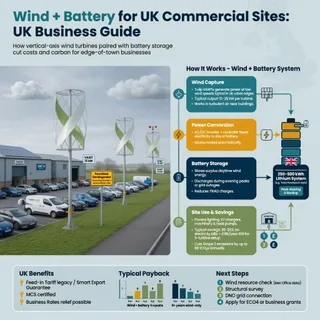
Wind plus battery is credible for a UK commercial site only with usable rotor-height wind, planning and a connection. Storage cannot make wind firm power.
Read article
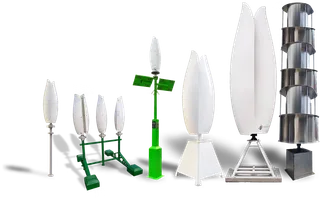
They need clean wind at the rotor, a safe mounting position, planning acceptability, suitable grid connection arrangements.
Read article
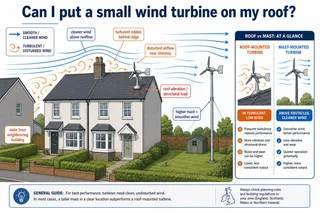
The main issues are wind quality, planning rules, structural safety, noise, grid connection, cost, turbine type, turbine size, and maintenance.
Read article
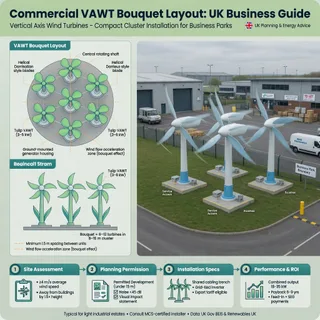
A commercial VAWT bouquet layout groups small vertical-axis turbines tightly. UK businesses still need wind, planning consent and a grid connection.
Read article



Mo's Solar Mission
Mo's Mission Nominations
Garlinge Primary School and Nursery
Garlinge Primary School and Nursery is a foundation primary school on Westfield Road in Margate, Kent, for children aged 3 to 11. It is m...
St Luke's Church of England Primary SchoolSt Luke's Church of England Primary School is a voluntary controlled Church of England primary school on Jubilee Road in Formby, Merseysi...
Comberbach Nursery and Primary SchoolComberbach Nursery and Primary School is a primary academy on Mather Drive in the village of Comberbach, near Northwich in Cheshire, for...
Locations
Solar installation near you
Write for Kilowatts.uk
Got a trade and something worth saying?
Write it here under your own name. Sign in, put a profile up, and start a guide. Pay only if you want more links from your articles out to your own site.
Register
Create a Kilowatts.uk account, or sign in if you already have one.
Author profile
Put your name, photo and experience on a public author page.
Start creating
Write a guide or a blog. Free authors can put one followed link to their own site in articles each month.
FAQ
Need Help? RoboMo's Got Answers
Can a domestic wind turbine charge a home battery?
Yes, if the turbine, controller and battery system are compatible. An existing grid-connected turbine may be able to keep its own inverter and use an AC-coupled battery. If you already have solar panels or a battery, give the installer the exact equipment models and ask how the system will detect wind surplus and manage any export limit.
How do I know if my home is windy enough for a turbine?
An exposed site with space for a freestanding mast is generally a better candidate than a sheltered garden or a roof surrounded by buildings. Ask for a site-specific generation forecast based on wind conditions at the proposed rotor height. Check how the forecast accounts for nearby trees, buildings and terrain, and ask whether measuring wind on site would improve it.
What size battery do I need for a domestic wind turbine?
Size the battery around the surplus you regularly generate and how much electricity you can use later. Usable capacity in kWh tells you how much the battery can store, while charge power in kW tells you how quickly it can absorb surplus. Ask your installer to compare half-hourly household demand with metered wind generation or a site-specific forecast.
Is it worth adding a battery to a domestic wind turbine?
A battery is most likely to add value if you regularly export surplus wind power and buy electricity from the grid later. Compare wind alone with wind plus storage using the same demand, generation and tariff assumptions. Allow for battery losses and any export income you would give up, then compare the extra savings with the cost of storage.
Do I need planning permission or grid approval for a wind turbine and battery?
Planning requirements depend on where you live and how the turbine is mounted. Give your local planning authority the proposed location, mounting type and overall height before ordering equipment. Ask your installer to confirm the grid connection process for the combined system, including any existing solar panels or battery.
Can I get paid for exporting wind power if I have a battery?
Eligible domestic wind installations in Great Britain can receive Smart Export Guarantee payments. Before buying, ask your chosen supplier what certification and export metering it accepts and, if the battery can charge from the grid, how it identifies eligible renewable exports. In Northern Ireland, check the purchase terms offered by your electricity supplier.
Will a wind turbine and battery power my home during a power cut?
Only if the system is designed to supply selected circuits safely while isolated from the grid. Some systems can power essential circuits from stored electricity while the wind inverter stays offline. Ask which circuits will stay live, how much power they can draw and whether the turbine can recharge the battery during the outage.
Live help
Need help right now?
Talk to RoboMo™ and get instant answers.