


Octopus, CATL and Ampace Explore Sodium-Ion Home Batteries - What Is Actually Agreed?
Published: 2026-11-24 08:25:10
Updated: 2026-11-24 00:25:56
See what Octopus, CATL and Ampace agreed to research on sodium-ion home batteries and which details UK buyers still lack on launch, price and capacity.
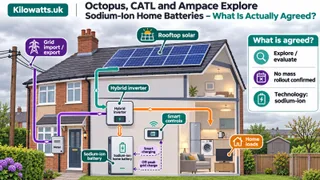
Octopus, CATL and Ampace explore sodium-ion home batteries
Octopus Energy, CATL and Ampace announced a memorandum of understanding on 3 November 2026 to explore smart home batteries for European markets. Sodium-ion is one option under consideration. The announcement leaves the battery chemistry, UK launch date, retail model, installed price, usable capacity and power output open. If you need home storage now, compare available systems against your electricity use, tariff and installation requirements. Octopus Energy partnership announcement
What have the three companies agreed to explore?
CATL and its subsidiary Ampace bring battery research and manufacturing expertise. Octopus brings software, smart tariffs and the ability to co-ordinate when connected batteries charge and discharge. Octopus names three areas for research: sodium-ion technology, higher-density cell designs and systems designed to last longer. CATL partnership announcement · Octopus Energy partnership announcement
Octopus also mentions its existing Nook home battery range. The sodium-ion reference concerns the research collaboration. Lower costs, improved safety and longer service life are development aims. For any model that comes to market, check the itemised installation quote, product safety documentation and warranty terms.
How would a sodium-ion home battery work?
A sodium-ion battery stores and releases energy as sodium ions move between electrodes. At home, it could store surplus solar electricity for use after sunset or charge from the grid when electricity is cheaper. The inverter limits how much power the system can deliver. The controller schedules charging and discharging.
A supplier can co-ordinate connected batteries as a virtual power plant. It can adjust when homes draw electricity from the grid and, where the equipment and connection allow, when they export to it. Intelligent Octopus Flux is one example. Its terms require ongoing access to control an eligible battery. Tariff compatibility would need separate confirmation for any model from the collaboration. Octopus smart tariff terms
Check whether you can set a minimum charge reserve, override the schedule and use local controls if the internet goes down. Ask which features would still work if you switched supplier or tariff.
What capacity, output and installed cost should you expect?
The announcement gives no figures for capacity, output, efficiency or installed cost. For home battery systems already available in the UK, the Energy Saving Trust gives an indicative range of £1,500 to £10,000 and puts a 5 kWh system at around £4,600. Your quote will depend on the battery size, whether you need an additional or replacement inverter, the cable route and any consumer unit or backup work. Energy Saving Trust battery storage guidance
Overview
A battery can store enough energy for a typical evening and still need power from the grid if several appliances run at once. If you want backup during a power cut, ask the installer which circuits would stay live, what continuous output the system can sustain in backup mode and how long it would run at your expected load. If you have solar panels, check whether they can recharge the battery while the grid is down. NHBC Foundation home battery guide, section 4.6
Would it suit a UK home, flat or business?
If you have solar panels, storage is most useful when you generate surplus electricity and have enough demand to use it later. Compare the import cost you would avoid with the export income you would give up, allowing for storage losses. If most of your surplus falls in summer, check how often you could charge and use the battery in winter before projecting savings from a summer day. Energy Saving Trust battery storage guidance
Without solar, use your tariff rates to calculate the cost per kilowatt-hour the battery delivers. For example, at 10p per kWh and 90% round-trip efficiency, divide 10p by 0.90 to get 11.1p per delivered kWh. If that electricity replaces imports at 28p per kWh, the gross saving is 16.9p per delivered kWh before battery wear and installation costs. Use your own rates and estimate how much electricity the battery would deliver during the higher-rate period before projecting annual savings.
For a flat, check where the battery could go, whose permission you would need and how it would connect to your electrical supply. The announcement gives no specification for a balcony battery or plug-in kit. If you are considering balcony solar, estimate how much electricity you would use as the panels generate it. The surplus would be available to store. For a shop, workshop or farm, start with half-hourly demand and export data. If you already use most of your solar generation during opening hours, you may have little surplus to store. If demand continues after closing, use that load to assess usable capacity. If demand spikes briefly, compare the inverter’s continuous output with the combined demand of the equipment running at the time. The collaboration focuses on residential storage. CATL partnership announcement
What should you check before buying or waiting?
If you already have solar, give your installer the inverter make and model, recent import and export readings and any paperwork showing an agreed export limit. A compatible hybrid inverter can manage both the solar panels and the battery. An AC-coupled retrofit can keep your existing solar inverter and add a separate battery inverter. Ask the installer to check consumer unit space, cable routing and the proposed battery location. They should confirm the distribution network operator’s connection process for the combined system, including whether G98 or G99 applies. Energy Networks Association connection guide
If you need storage by a particular date, use the Kilowatts UK installer directory to find installers and give each one the same usage data and tariff assumptions. Ask how the proposed usable capacity and continuous output match your demand, and get any inverter, backup or electrical work itemised. You can also book a free home energy survey to discuss your options. If you can wait for a product from the Octopus collaboration, look for a UK specification, an installed quote and written confirmation of tariff compatibility before comparing it with systems already available.
Solar comparison
Compare solar for your property
Enter your postcode to assess your roof, compare solar options and get quotes from UK installers.
- Free postcode start
- Home, business and industrial
- RoboMo™ maps your roof
See which panels fit your roof
Choose home, business or industrial, then enter your postcode. RoboMo maps the roof and ranks panel brands by fit.
1. Postcode Start the assessment for your property.
2. Pin the roof Mark the array on the map.
3. Compare RoboMo™ builds your options.

Battery ROI tool
See what a battery saves on your bill
Enter the day rate, off-peak rate and export rate. The calculator ranks batteries in the Kilowatts shop over 10 years. Home batteries also suit offices and small commercial sites.
Reading
Sources and further reading

Octopus, CATL and Ampace are exploring smart home batteries, including sodium-ion technology. The agreement has no confirmed product price or UK launch date.
Read article
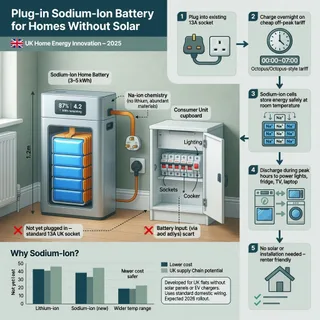
A plug-in sodium-ion battery for homes without solar is in development, not on sale. UK grid rules may still block a simple wall-socket connection.
Read article
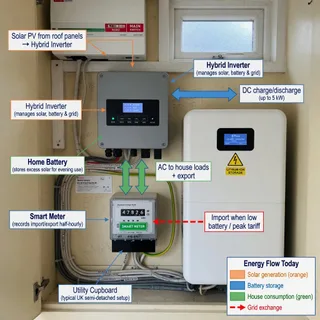
Octopus Flux and Intelligent Octopus Flux are domestic battery storage tariffs that price import and export by time of day, not a free battery.
Read article
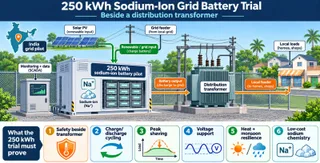
Jaipur's 250 kWh sodium-ion battery trial will test whether storage can ease peak transformer loads. See what UK battery buyers can learn about sizing.
Read article


Mo's Solar Mission
Mo's Mission Nominations
Garlinge Primary School and Nursery
Garlinge Primary School and Nursery is a foundation primary school on Westfield Road in Margate, Kent, for children aged 3 to 11. It is m...
St Luke's Church of England Primary SchoolSt Luke's Church of England Primary School is a voluntary controlled Church of England primary school on Jubilee Road in Formby, Merseysi...
Comberbach Nursery and Primary SchoolComberbach Nursery and Primary School is a primary academy on Mather Drive in the village of Comberbach, near Northwich in Cheshire, for...
Locations
Solar installation near you
Write for Kilowatts.uk
Got a trade and something worth saying?
Write it here under your own name. Sign in, put a profile up, and start a guide. Pay only if you want more links from your articles out to your own site.
Register
Create a Kilowatts.uk account, or sign in if you already have one.
Author profile
Put your name, photo and experience on a public author page.
Start creating
Write a guide or a blog. Free authors can put one followed link to their own site in articles each month.
FAQ
Need Help? RoboMo's Got Answers
What have Octopus Energy, CATL and Ampace actually agreed?
The three companies signed a memorandum of understanding to explore smart home batteries for European markets. Their research covers sodium-ion technology, higher-density cell designs and ways to extend battery life. The choice of chemistry and plans for a commercial launch are still open.
Is Octopus launching a sodium-ion Nook battery in the UK?
The announcement mentions the existing Nook range and discusses sodium-ion as an option for the research collaboration. It gives no confirmed sodium-ion Nook model, UK release date or details of how customers would buy one.
Will a sodium-ion home battery be cheaper, safer or longer-lasting?
Lower costs, improved safety and longer service life are development aims. The announcement gives no product figures to show how a sodium-ion model would compare with batteries already on sale. If a model launches, compare its installed quote, safety documentation and warranty, including how much capacity the warranty guarantees the battery will retain.
Would a battery from the collaboration work with Intelligent Octopus Flux?
Compatibility would need to be confirmed for the specific model. Intelligent Octopus Flux requires ongoing access to control an eligible battery. Ask whether you can set a minimum charge reserve, override the schedule and keep using key features if you switch tariff or supplier.
Could I use one with my existing solar panels or without solar?
A home battery can store surplus solar generation or charge from the grid when electricity is cheaper. For an existing solar installation, ask an installer to check inverter compatibility and any agreed export limit. Without solar, compare the cost of off-peak charging after storage losses with the cost of the peak-rate electricity you would otherwise buy.
Would a battery from the collaboration keep my home powered during a power cut?
Backup capability has yet to be confirmed. For any system you consider, ask which circuits would stay live, how much power the battery can supply continuously and how long it would last at your expected demand. If you have solar panels, check whether they can recharge the battery while the grid is down.
Should I wait for this battery or compare systems available now?
If you need storage by a particular date, compare itemised quotes for systems available now using the same electricity usage and tariff assumptions. Check how much energy each battery can store and use in kWh, and how much power it can deliver continuously in kW. If you can wait, use a confirmed UK specification, an installed quote and written confirmation of tariff compatibility to compare any future model.
Live help
Need help right now?
Talk to RoboMo™ and get instant answers.