Founder & Renewable Energy Author, kilowatts.uk


Founder & Renewable Energy Author, kilowatts.uk
Article
Business EV chargers can make sense for UK homeowners who charge a company car or van, run a business from home, need reimbursement records.
Learn business ev chargers with UK-specific guidance, including costs, savings, rules, and what to do next.
Business EV chargers can make sense for UK homeowners who charge a company car or van, run a business from home, need reimbursement records, or expect more than one work vehicle. The right answer depends on vehicle use, ownership, charging pattern, electrical capacity, software records, tax treatment and whether solar panels or battery storage are involved.
For many homes, a compliant smart domestic EV charger is still the right choice. A business-grade setup becomes useful when you need stronger reporting, user access control, reliable connectivity, dynamic load management, or a design that can later support staff, visitors or a small fleet.
The important point is not the marketing label on the charger. It is whether the electrical design, metering, software and paperwork match how the vehicle is used in real life. A sole trader charging one van overnight has different needs from a director charging a company car, or a home-based business planning solar, battery storage and a second EV.
A business EV charger is usually defined by its use case rather than by the shape of the unit. It may be installed at a house, office, shop, depot or rented commercial unit, but the practical difference is that business charging often needs better control, clearer records and a design that can cope with later changes.
At a domestic property, the installer still has to assess the job as an EV charge point installation. That means checking the consumer unit, earthing arrangement, protective devices, cable route, parking position, charger location, connectivity and whether the site needs dynamic load management. If the charger supports a work vehicle that returns nearly empty each day, the demand may be higher than an occasional private top-up.
A home business installation can sit between domestic and commercial work. The charger may be mounted on a house, but the usage pattern may look more like a workplace asset if daily mileage is high, different users need access, or charging data is needed for accounts or employer reimbursement.
A business-grade setup is worth considering when charging is part of how you earn money, not just how you commute. This does not always mean installing a larger or more expensive charger. It does mean the quote should cover records, control, compliance and future use as well as the basic electrical installation. A common mistake is choosing the cheapest domestic charger and later finding that it cannot provide the data, access control, connectivity or expansion route the business needs. It is better to explain the business use at survey stage, even if the final recommendation remains a straightforward single-phase smart home charger.
| Decision area | Standard smart home charger may be enough when | Business-grade features may help when |
|---|---|---|
| Vehicle use | One privately used EV charges at home. | A company car or work van needs traceable charging records. |
| Users | One household driver uses the charger. | Different drivers, staff or vehicles need separate access. |
| Records | Basic app history is enough for personal use. | Exportable kWh data is needed for reimbursement or accounts. |
| Electrical load | The property has one charger and modest other demand. | High mileage, multiple EVs or large household loads need management. |
| Connectivity | Wi-Fi is strong and app control is not business-critical. | Reliable data upload is needed for reporting or remote management. |
| Future plans | No further vehicles or energy upgrades are expected. | Solar PV, battery storage, a second charger or fleet use is likely later. |
A home business EV charger is still an electrical installation, so compliance should not be treated as an optional extra. The installer should design and install the charge point in line with current UK electrical requirements, including BS 7671 and the relevant EV charging guidance used by competent electricians, such as the IET Code of Practice for Electric Vehicle Charging Equipment Installation.
Most domestic EV charge point work in England and Wales also has Building Regulations implications, commonly through Part P notification where applicable. A competent installer should be able to explain how the work will be certified and notified, what electrical certificate you will receive, and what information is needed for the Distribution Network Operator process.
Modern UK private charge points are also affected by the Electric Vehicles Smart Charge Points Regulations, which require smart functionality for many domestic and workplace private charge points. The installer should confirm that the chosen equipment is appropriate for the setting and current rules.
These points are not just paperwork. They affect safety, nuisance tripping, future sale of the property and whether the installation can be maintained or expanded sensibly later.
The electrical survey is where a business EV charger project becomes realistic or not. Installers are not only looking for a wall space near the driveway. They need to confirm that the incoming supply, consumer unit, earthing arrangement, cable route and protective devices allow the charger to operate safely without overloading the property.
UK homes vary widely. A modern detached house with a tidy consumer unit and off-street parking is a different job from an older terrace with limited space, a long cable route and a consumer unit already due for remedial work. If the charger is for a work van that returns with a low battery most evenings, the charging demand may be much more regular than a private car that only needs topping up.
Installers will usually ask about the vehicle battery size, typical daily mileage, how often the vehicle must charge overnight, and the large electrical loads already in the home. They will also need to see the consumer unit, the cable route to the parking position, and the signal strength for Wi-Fi or mobile data at the charger location.
These details influence whether dynamic load management is sensible. Load management allows the charger to reduce charging power when the home is using a lot of electricity elsewhere, helping to avoid overloading the supply or causing nuisance tripping. If a second EV or charger is likely in future, say so before the design is fixed.
The local Distribution Network Operator is responsible for the electricity network serving the property. For EV charge point installations, the installer will normally consider whether the DNO needs to be notified after installation or contacted before installation, depending on the site, equipment and total demand. The exact process should be checked for the project rather than assumed.
G98 and G99 are often mentioned in the same conversations as EV charging, but they mainly relate to generation and export equipment such as solar PV inverters and battery systems that can operate in parallel with the grid. A normal EV charger is a demand load, not a generation system, so it should not be confused with a solar or battery export application.
The distinction matters when a homeowner is combining technologies. A simple EV charger may follow the EV charge point notification or application route, while solar PV, battery storage or export-capable equipment may bring G98 or G99 into scope. If an installation includes EV charging, solar, batteries and export limitation, ask who is handling each part of the DNO process and what assumptions have been made about import and export limits. If you are unsure whether the property needs consent, start by checking the basics around permission to install.
Smart charging is especially important for business EV chargers because the cheapest-looking installation may not be the easiest one to manage. A smart charger can schedule charging, record sessions and, where supported, respond to tariff windows. For a company vehicle, the quality of the usage data may matter as much as the charging speed.
Homeowners should not assume every app provides business-ready records. Some chargers give a simple session history, while others offer user profiles, RFID access, CSV export, API access or fleet reporting. If reimbursement is the reason for installing the charger, ask to see an example of the data before choosing the unit.
There is also a practical difference between measuring energy delivered by the charger and proving the true cost of that energy. Tariffs, solar self-consumption, battery discharge, standing charges and time-of-use pricing can complicate reimbursement. HMRC guidance, employer policy and accountant advice may all be relevant, so the charger should be specified around the records actually required.
For some homeowners, a normal smart charger with reliable session history is enough. For others, especially where multiple drivers or formal reimbursement are involved, software capability should be treated as part of the specification rather than an afterthought.
Business use changes what matters in a charger. Charging speed is still relevant, but a slightly slower charger with reliable records and load management may be more useful than a faster-looking option with weak reporting or poor connectivity at the parking space. The best choice depends on how the charger will be used over several years. A single company car at home, one work van with high daily mileage, and a small business planning two vehicles all have different priorities.
| Feature | Why it matters for business use | What to ask before choosing |
|---|---|---|
| User access | Helps separate household and business charging. | Can users, vehicles or RFID cards be reported separately? |
| Session reporting | Supports reimbursement and internal records. | Can kWh data be exported in a useful format? |
| Load management | Protects the home supply when demand is high. | Is dynamic load management included or optional? |
| Connectivity | Keeps smart features and records working. | Does the charger support Wi-Fi, mobile data or wired options? |
| Solar compatibility | Helps use spare solar generation when practical. | Can the charger work with the proposed inverter or energy system? |
| Battery interaction | Avoids unwanted battery discharge in some setups. | Can charging priorities be configured clearly? |
| Future expansion | Reduces the risk of early replacement. | Can the system support another charger or vehicle later? |
Do not rely only on the charger brochure. Ask the installer how the feature will work at your property, with your supply, your parking arrangement and your business record-keeping needs. If the home setup may later grow into workplace-style charging, consider how commercial EV upgrades would differ from a single domestic unit.
Solar panels can reduce grid electricity use for EV charging, but they do not automatically make business charging cheap or simple. The result depends on when the vehicle is parked, how much spare solar generation is available, the charger controls and whether the business vehicle must be full by a fixed time.
A van parked at home during the day can use solar more directly than a car that leaves early and returns after sunset. A battery can shift some energy, but it adds cost, losses and control complexity, so it should be sized for the whole property rather than treated as a guaranteed EV charging solution.
Hybrid inverters, AC-coupled batteries and EV chargers can all interact differently. The installer should explain how the charger detects surplus solar, whether it can avoid draining the home battery unintentionally, what happens during high household demand, and how the system behaves if the vehicle needs a reliable overnight charge.
Business EV charger costs vary because the charger unit is only one part of the job. The final price is affected by the cable route, consumer unit condition, protective equipment, load management, groundworks, connectivity, metering requirements, software features and any work needed to make the installation compliant.
It would be misleading to give a single universal price without a survey because two homes using the same charger can have very different installation complexity. A simple driveway installation near a suitable consumer unit is a different project from a long cable run to a detached parking bay, or a setup that combines EV charging with solar PV, battery storage and export limitation.
Commercial grants, residential schemes and tax treatment can change. Homeowners should check current OZEV guidance, HMRC guidance, employer reimbursement policy and accountant advice where the charger is linked to a company car, sole trader vehicle, workplace benefit or business expense. Do not assume that a domestic address automatically qualifies for a business scheme.
A good quote should separate confirmed items from provisional allowances. If the installer has not seen the consumer unit, parking location, cable route and supply details, the price may change after survey. That is normal, but the quote should explain why.
The most common problems happen when the charger is specified as a simple domestic accessory even though the vehicle is central to a business. That can lead to weak records, poor connectivity, inconvenient charging schedules or expensive changes when a second vehicle arrives.
Another mistake is ignoring physical usability. Charger position, cable reach, trip hazards, weather exposure, driveway access and whether the van can park close enough every night all affect the usefulness of the installation. A neat charger on the wrong wall is still the wrong charger.
These issues are usually avoidable with a proper survey and a clear brief. Tell the installer who owns the vehicle, how it is used, when it is parked, how many miles it covers, what records are needed and whether a second vehicle or charger may be added later.
Before accepting a quote, ask for a design that matches how the charger will be used over the next few years, not just on installation day. For a homeowner with a business vehicle, the best value usually comes from safe electrical design, reliable connectivity, useful records and a location that works every day.
You do not need to over-specify the project, but you do need to avoid closing off sensible future options. If a second EV, solar array, battery or workplace-style charging arrangement is likely, mention it early so the installer can allow for cable routes, load management and equipment compatibility.
A clear answer to these questions is more useful than a headline charger specification. It shows whether the installer understands the difference between a convenient home charger and a business asset that has to work reliably.
If you are comparing business EV chargers for a home-based vehicle, start with the usage pattern rather than a product shortlist. Work out how many miles the vehicle usually covers, when it is parked, who needs access, what records are required and whether solar or battery storage may be added later.
Then speak to an installer with those details ready. A good survey should confirm the electrical route, charger position, compliance requirements, DNO process, data features and any limitations before installation is booked. If the decision depends on grants, tax or employer reimbursement, check those points separately before committing.
Solar comparison
Enter your postcode to assess your roof, compare solar options and connect with trusted UK installers.
Choose home, business or industrial, then enter your postcode. RoboMo maps the roof and ranks panel brands by fit.
1. Postcode Start the assessment for your property.
2. Pin the roof Mark the array on the map.
3. Compare RoboMo™ builds your options.

Battery ROI tool
Enter the day rate, off-peak rate and export rate. The calculator ranks batteries in the Kilowatts shop over 10 years. Home batteries also suit offices and small commercial sites.
Reading
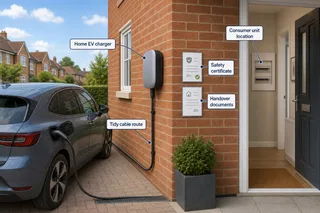
EV charger installation paperwork should prove that the charge point was designed, installed, inspected, tested.
Read article

For most UK businesses, solar is the more practical starting point. Wind is worth serious consideration only on exposed sites with enough land.
Read article
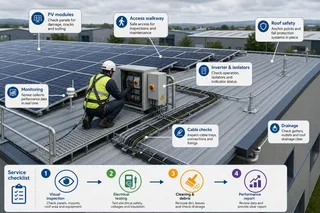
Commercial solar servicing is planned and reactive maintenance for a business solar PV system after installation.
Read article
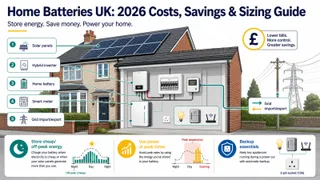
If you are weighing up whether home batteries make sense for your property in 2026, you are in the right place. This guide cuts through the noise.
Read article
Write for Kilowatts.uk
Write it here under your own name. Sign in, put a profile up, and start a guide. Pay only if you want more links from your articles out to your own site.
Create a Kilowatts.uk account, or sign in if you already have one.
Put your name, photo and experience on a public author page.
Write a guide or a blog. Free authors can put one followed link to their own site in articles each month.
FAQ
Live help
Talk to RoboMo™ and get instant answers.
Live chat